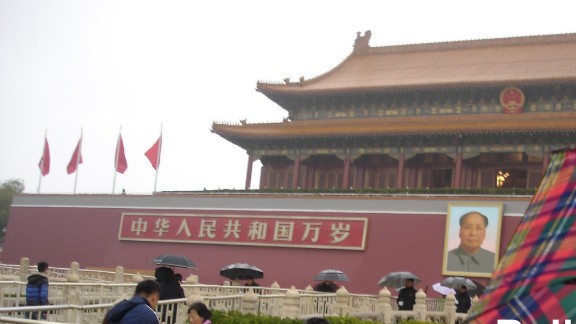
The case is one of the first to be prosecuted under the National Security Act. Yet the conduct at its centre did not resemble the spy fiction that shaped Britain's security imagination. According to the sentencing judge, it involved surveillance and information gathering about dissidents carried out through what she called a “shadow policing” operation. The court sentenced Peter Wai, who conducted “shadow policing” operations on Chinese dissidents in the UK, to 10 years, while his handler, Bill Yuen, received an eight-year term.
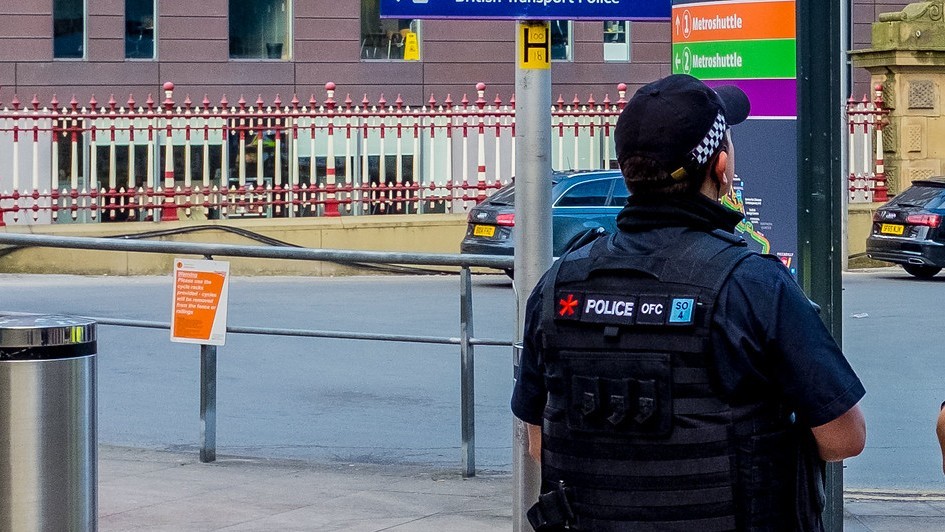
Wai, 41, was a Border Force officer at Heathrow airport who had previously served in the Metropolitan police and as a special constable in the City of London police. The jury heard that Yuen, 66, a senior manager at the Hong Kong Economic and Trade Office, had taken over the handling of Wai shortly after they met in 2021 to conduct surveillance on dissidents. After a two-month trial at the Old Bailey, the pair were convicted under the National Security Act of assisting a foreign intelligence service. Wai was also convicted of misconduct in a public office over his use of a Home Office computer system to acquire details about his targets. The prosecution was not describing outsiders probing Britain's institutions. It was describing a serving officer using them.
The judge did not treat the conduct as marginal. In a televised sentencing, Mrs Justice Cheema-Grubb said the defendants' actions were “deliberate, concerted and serious”. She said they had caused “real and significant” harm, leaving those targeted in fear and distress. Later she added that she had “no doubt” that the two men's criminal activities contributed to the “fear, insecurity and distress for those targeted”. The people under surveillance were not anonymous figures in a security file. They included Nathan Law, an exiled politician who was the subject of several spying operations, and a second young activist in the UK whose family was being persecuted in mainland China.
The court heard that Wai infiltrated Hong Kong pro-democracy groups and was instructed to gather information on politicians, including the former Tory leader Iain Duncan Smith and the peer Helena Kennedy. The judge said conduct of this kind threatens not only the individual victims but the sovereignty of the state and public confidence in institutions. That sentence carried an awkward implication. The threat was not simply that dissidents could be watched. It was that people granted authority inside British institutions could be persuaded to turn it outward.
Britain built a legal response but struggled to define the threat
Parliament wrote the National Security Act for precisely that world. It enacted the legislation in response to the growing reality that the UK now faces persistent, active and often clandestine interference by foreign state actors. The government's own fact sheet says the Act is a response to the threat of hostile activity from states targeting the UK's democracy, economy and values and that the threats are diverse and persistent, taking forms that include espionage, foreign interference, sabotage, disinformation, cyber operations and even assassinations and poisonings. The law arrived with urgency. The prosecution that followed exposed how difficult urgency can be to operationalise.
The judge told the court that she was unable to take into account evidence heard of the men's spying before the law came into force in December 2023. Prosecutors faced another obstacle. The Crown Prosecution Service determined that it required specific evidence that China posed an “active threat” to UK national security at the relevant time, following a Court of Appeal ruling known as “Roussev”. Yet the Deputy National Security Adviser would not describe China as posing an “active threat” to national security at the relevant time. A committee reviewing the issue admitted: “We remain unclear as to why the Court of Appeal ruling altered the legal landscape so significantly.”
The contradiction sits in plain sight. Parliament said the country faced persistent, active and often clandestine interference by foreign state actors. Prosecutors argued they needed proof that China posed an active threat. The government's central national security witness would not use those words. The committee acknowledged that such a refusal would undermine the prosecution's case. Britain created a law to confront state interference while its own institutions struggled to agree on the language required to describe the threat they said the law was written to meet.
The evidence now includes the limits of the state's capacity
The investigation itself showed how quickly capacity becomes the next constraint. Yuen, Wai and a third British national, Matthew Trickett, were arrested with seven others in May 2024 after a failed break-in of a flat in Pontefract, West Yorkshire, that belonged to Monica Kwong. Kwong had fled Hong Kong in 2023. The seven others arrested, who had recently arrived in the UK, fled the country after being released. The reason was stark: the police did not have the interpretation resources to analyse the 200 devices seized during the arrest in order to charge them.
That fact may prove harder to absorb than the sentences handed down this week. Britain now has a law designed to counter hostile state activity, a judge willing to call such offences grave, and investigators who say they disrupted operations targeting dissidents on British soil. It also has 200 seized devices that police lacked the interpretation resources to analyse. The gap between those two realities is not theoretical. It is part of the evidence.