
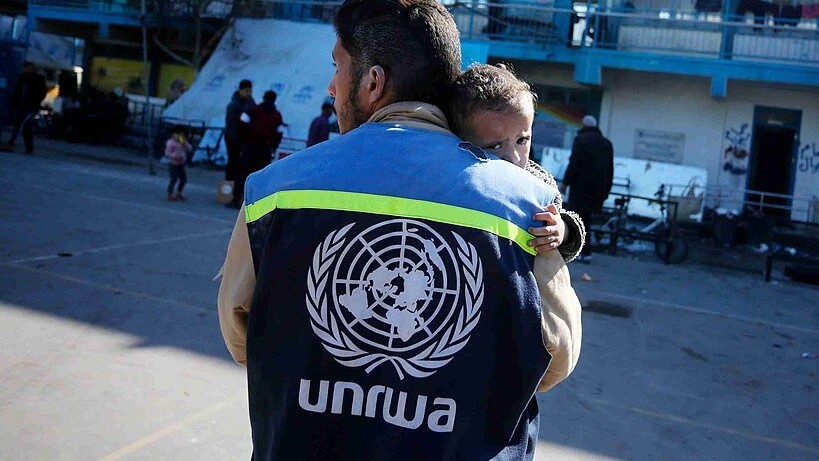
The pressure on UNRWA did not begin with the firings. Israeli authorities have long charged UNRWA with being directly tied to Hamas. The agency's former legal adviser, James Lindsay, has described how Hamas, staff pressures and structural limitations shaped the agency's operations in Gaza. The charge from Israel is broader still. The Israeli military says evidence has exposed numerous incidents of Hamas exploiting UNRWA infrastructure, while the IDF claims that among UNRWA's 12,521 employees in Gaza, at least 1,462 — 12 per cent — are linked to militant organisations. The figures are disputed by implication if not directly, but they have become impossible for the agency to ignore.
That changed with a USAID investigation that referred more than 100 UNRWA staff members for suspension or dismissal. The investigation, published on June 5, assessed that a number of employees were deeply enmeshed in Hamas' civil society and military operations. Its findings were unusually concrete: a deputy school principal allegedly served as an al-Qassam deputy company commander, another as a squad leader in the Khan Younis Brigade, and a teacher as a Hamas sniper. The investigation also found numerous teachers and principals it claimed participated directly in Hamas' October 7 attacks. UNRWA's dismissals came after those allegations entered the public record.
The agency still refuses to concede the point. UNRWA says it asked Israel for evidence, received none, and simultaneously insists the dismissals were not a validation of the allegations. The contradiction is not rhetorical. If the accusations are unsubstantiated, the agency has dismissed dozens of employees to manage political and security risks. If the accusations have merit, the agency is acknowledging a breach while declining to name it. Either way, neutrality is no longer a shield; it is the subject under examination.
Neutrality is no longer a shield but the subject under examination
Outside critics see something more fundamental. UN Watch welcomed the dismissals but accused the agency of hypocrisy. Its executive director, Hillel Neuer, said years of documentation and the USAID Inspector General had "finally forced the agency's hand". UN Watch called UNRWA's position "incoherent", arguing the agency remained more interested in protecting itself and its "Hamas-embedded workforce" than in neutrality or accountability. The language is partisan, but it lands because the agency's own actions have created an uncomfortable ambiguity.
That ambiguity extends beyond personnel files. Israel says it has shown repeated use of UNRWA infrastructure for terror activities and provided evidence that the agency's schools incited hatred of Israel and glorification of attacks against Israelis. The Israeli military says evidence of Hamas exploiting UNRWA facilities has emerged repeatedly since October 7. UNRWA rejects the conclusion these allegations imply, yet it is already acting as though the risk they describe is real.
The agency now occupies a narrower and more precarious position
Philippe Lazzarini, UNRWA's chief, warned that it would be "immensely irresponsible" to sanction the agency and the community it serves because of allegations against some individuals. That may be true. But the institution now occupies a narrower and more precarious position. It has fired 70 employees to protect its safety and security while insisting the dismissals validate nothing. The unresolved question is no longer whether accusations against UNRWA exist. It is whether an agency can deny a problem strongly enough to preserve its legitimacy after it has already acted as though the problem is serious.
Cover photo Ashraf Amra • CC BY-SA 3.0