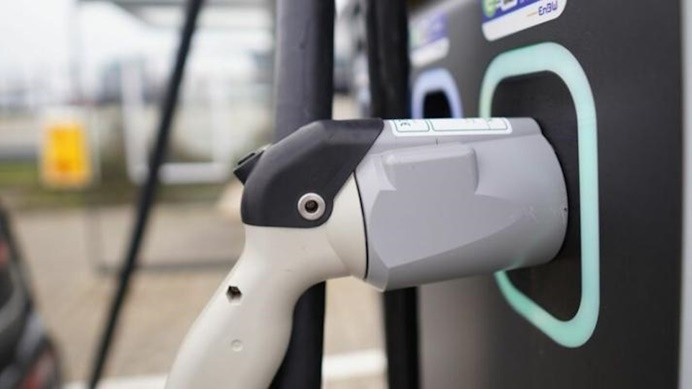
China sold more than 2.5 million electric cars in the first quarter of 2025 and averaged around 875,000 a month. In February and March, electric vehicles accounted for more than half of all cars sold. Europe, by contrast, sold just over 900,000 electric cars in the same period, of which 625,000 were in the European Union. The imbalance is not a slogan or a fear. It is a manufacturing fact, and Brussels is now trying to decide how much of it it is willing to absorb.
That is why the European Commission plans to impose countervailing duties on Chinese hybrid cars, according to a report by Handelsblatt citing senior EU officials and industry sources. Three people involved said preparations have already been made so tariffs can be imposed as soon as a majority of EU member states approve them. The Commission declined to comment, but the sequence matters. The EU first moved against Chinese electric vehicles. Hybrids now appear next.
The stated concern extends beyond cars. European Union leaders this week debated tougher measures to curb the bloc's growing trade deficit with China and its heavy reliance on rare earths and other critical supplies. Cars sit at the centre of that discussion because they compress several anxieties into a single object: industrial decline, supply-chain dependence and the fear that Europe's green transition could end with its manufacturers displaced in their home market.
The Commission is not starting from zero. The bloc has imposed duties on electric vehicles made in China since 2024, and the European Union has since raised tariffs on Chinese EVs. The new tariffs range from 17.4% to 37.6%, on top of an existing 10% duty. Brussels says it is acting to protect Europe's motor industry. Yet the numbers reveal the difficulty of that ambition. The EU is the largest overseas market for China's EV industry, and Chinese producers have scale that Europe is only beginning to match.
The companies in Brussels' sights are not obscure challengers. Handelsblatt reported that the Commission aims to impose additional countervailing duties on vehicles from Chinese manufacturers such as BYD, Chery and SAIC. SAIC already illustrates the stakes. Its MG brand is among the carmakers hardest hit by the new tariffs. But tariffs are blunt instruments. They raise costs for producers and, potentially, for buyers. The new measures could raise EV prices across the EU, making them less affordable for European consumers.
That trade-off explains why Brussels has explored mechanisms other than tariffs. The Commission opened an interim review of EV duties after a request from Volkswagen Anhui, a Chinese joint venture that exports the Cupra Tavascan model. After consultations with MOFCOM, the Commission issued guidance explaining how exporters could apply for minimum import prices, even though MOFCOM has historically opposed company-specific price undertakings. Some fear this amounts to an opening for Chinese exporters. The evidence offered in the source material is more cautious: concerns exist that the Commission may have opened the door wider, but that outcome is considered unlikely.
Dependence and protection pull Europe in opposite directions
The deeper problem is that Europe is trying to defend an industry while simultaneously depending on the capabilities of its competitors. Chinese battery and EV companies lead in cost optimisation, manufacturing scale and energy density, areas in which Europe is lagging. European policymakers want investment and technology transfer without dependency. The structure of that investment turns out to matter as much as its size.
There are examples that point in different directions. Early evidence from CATL's Erfurt plant and BYD's bus factory in Hungary shows foreign staff training local workers before transitioning to full local employment. Such projects have the potential to diversify industrial activity and advance cohesion objectives. Yet projects that rely heavily on externally sourced labour or partially assembled components provide limited local benefit, and without requirements for local hiring, supplier participation and training, investment may fail to deliver durable economic resilience.
That is the tension running beneath Europe's tariff strategy. Brussels is trying to slow Chinese imports while encouraging Chinese investment, reduce dependence while importing expertise, and protect consumers while accepting higher prices. The contradiction is not hidden. It is visible in every factory Europe wants built and every tariff it wants raised. The uncomfortable fact is that Chinese firms still lead in the manufacturing disciplines where Europe is weakest, which means the question facing Brussels is no longer whether Chinese companies will shape Europe's electric future, but on whose terms they already are.