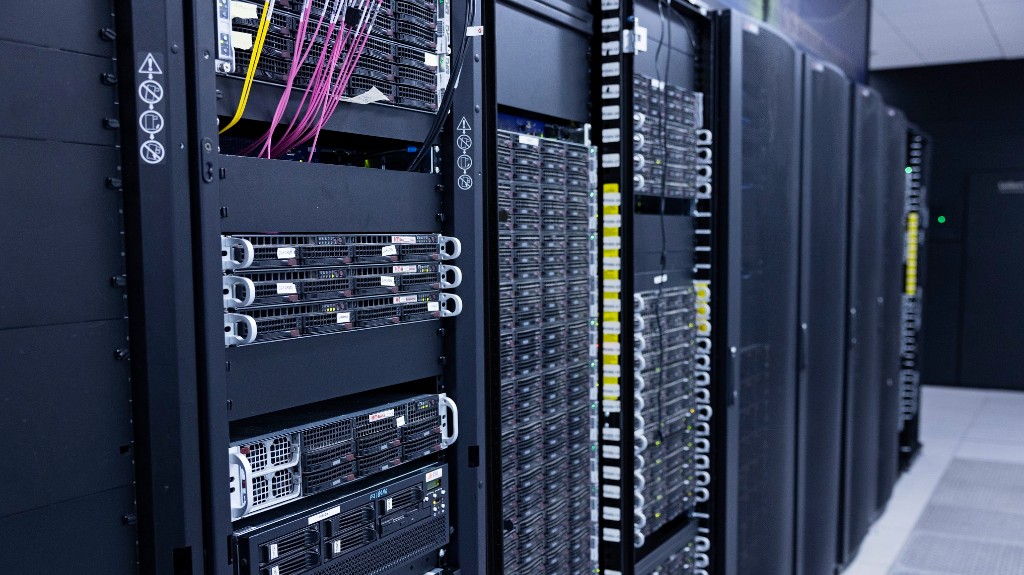
Triple Europe's datacentre capacity over five to seven years. That is the ambition at the centre of Brussels' technology strategy, backed by plans for "datacentre acceleration zones" where local authorities would have to approve datacentre applications within 12 months, even if that means weakening environmental and planning reviews. The promise is speed. The risk is that Europe accelerates into dependencies it says it wants to escape.
The contradiction is visible inside the policy itself. Critics argue that the commission's proposals fail to engage critically with AI's potential benefits, risks and technical limitations and instead assume AI's benefits as a given. The same shortsighted approach informs much of the EU's overall strategy on tech, including attempts to weaken privacy and AI safety rules in order to "catch up" with the US. Speed becomes the objective. The question of what Europe is racing toward recedes.
That question matters because datacentres are not a marginal technology. Data centres are a vital and quickly growing infrastructure across Europe and the world, supporting cloud services, AI and streaming. But their rapidly increasing energy demand is a challenge. They also have a substantial environmental and climate impact because they require large quantities of cooling water and can produce significant emissions if their electricity is not decarbonised. The infrastructure Europe wants more of is also infrastructure that competes for scarce resources.
Europe's ambitions collide with the limits of energy and public consent
The scale is already difficult to ignore. Data centres are responsible for about 1.5%, or 415 terawatt-hours, of the world's yearly electricity consumption. Their consumption is set to more than double towards 945 TWh by 2030, driven mainly by energy-intensive computing for AI. In Europe, data centres are expected to account for 10% of electricity demand growth to 2030 under current policies. Demand growth between now and 2030 is projected to exceed that of electric vehicles. The constraint is no longer computing power alone. It is electricity.
That pressure is already reshaping investment decisions. Expensive delays in core markets are prompting data centre investors to look toward regions with more available grid capacity. Policymakers have noticed. Concerns over electricity affordability are front and centre, alongside a growing recognition that datacentres must expand without pushing costs onto households. Yet the acceleration zones move in the opposite direction: they raise serious concerns about transparency, democratic accountability and sustainability at a moment when public opposition to datacentres is exploding.
The tension becomes sharper when sovereignty enters the conversation. Brussels increasingly speaks of technological independence, yet fails to recognise that digital sovereignty isn't just about who owns or controls technology. It is also about having an independent vision for how that technology is designed, developed and deployed. Without that vision, Europe will remain a decision-taker rather than a decision-maker. Building more infrastructure does not automatically produce more autonomy.
Sovereignty demands more than infrastructure and faster construction
In fact, the acceleration strategy may undermine the sovereignty it invokes. By failing to include criteria on company size or nationality, the zones could end up further entrenching the US hyperscalers that dominate Europe's cloud market. At the same time, Europe is constructing a different logic for its public sector. A cloud provider seeking to compete for meaningful public-sector contracts across EU member states will need CADA certification, and at Levels 3 and 4, US-domiciled hyperscalers face structural barriers that cannot be resolved through contractual workarounds or regional infrastructure investment alone.
This is not an accidental tension. The CADA framework intentionally aligns with and supersedes the earlier EUCS scheme. Yet EUCS underwent contentious revision through 2024 and into 2025, and early drafts contained explicit sovereignty-based eligibility restrictions, including EU headquarters requirements, before those provisions were removed under industry pressure. Europe is therefore pursuing two ideas at once: faster datacentre construction regardless of ownership, and stricter sovereignty requirements for the most sensitive digital workloads.
The result is a strategy pulling against itself. Europe wants AI, but worries about electricity. It wants sovereignty, but risks reinforcing foreign dominance. It wants faster permitting, while public resistance grows. The uncomfortable fact is not that these tensions exist. It is that if Europe really wants to be sovereign, it needs to free itself from Silicon Valley's ideology, not just its tech. Otherwise the datacentres that rise across the continent may prove that Europe expanded its infrastructure faster than it defined the purpose it was meant to serve.