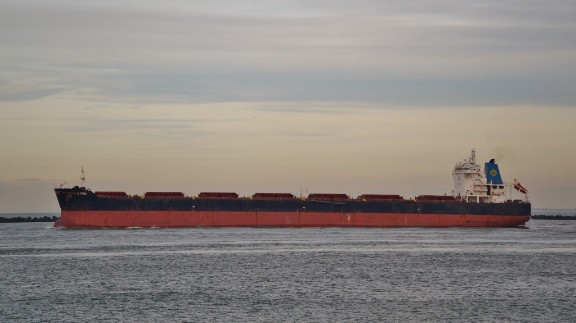
The most revealing number in this year's gathering of leaders is not a growth forecast or an oil price. It is the count of ships waiting. Hundreds of tankers are backed up in the Strait of Hormuz, and de-mining is urgently needed if they are to reach the arteries of the world economy in time. The queue is physical proof that wars no longer need to destroy infrastructure to paralyse it. They only need to make movement uncertain.
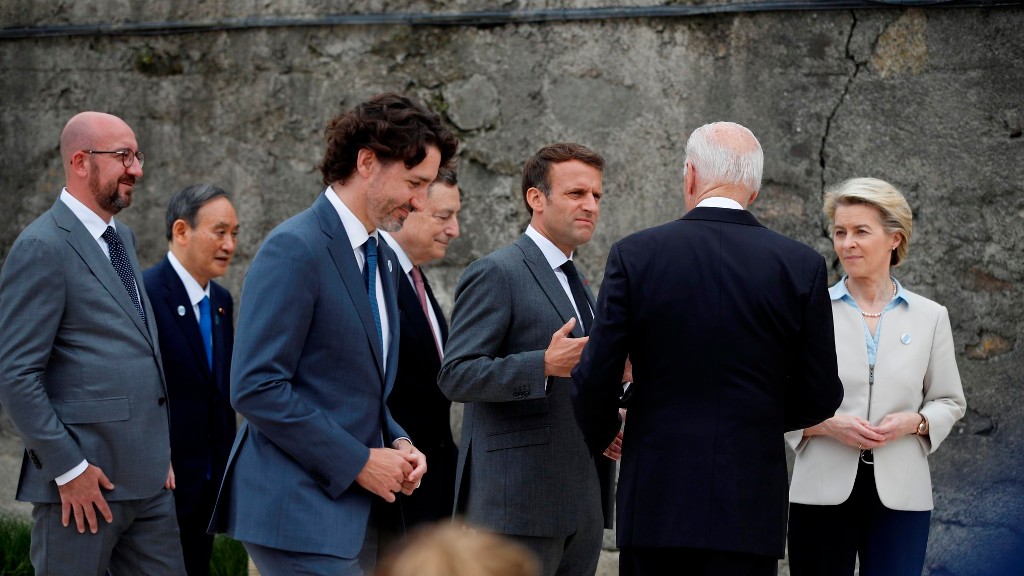
That uncertainty hangs over a summit whose host has spent months lowering the political temperature. Last year, Trump insulted Emmanuel Macron as "publicity seeking" and declared: "Purposefully or not, Emmanuel Macron always gets it wrong." Macron responded by accommodation rather than confrontation. He will attend his 10th G7 summit, chose not to take umbrage, and even postponed the summit's start to allow Trump to celebrate his 80th birthday with a UFC event on the White House lawn. The calculation is obvious enough that French officials discuss it openly: Macron is holding out a dinner in Versailles if Trump stays the three days, because Trump adores the palace's gold and the two men respect each other. Yet it remains touch and go whether Trump completes the summit.
Personal calculations cannot insulate a fragile summit from economic reality
The fragility is personal, but the consequences are global. Reports from Washington suggest Trump has not been in a celebratory mood, and that he may reproach the leaders of Canada, France, Germany, Italy, Japan and the UK for refusing to support his earlier plan to reopen the Strait of Hormuz through force and for demanding the planned Franco-British naval taskforce move quickly. Meanwhile, Iran may again draw presidential attention, while Trump also faces pressure from the wars in Ukraine and Gaza. The agenda is crowded, but the bottleneck sits elsewhere: in shipping lanes, commodity markets and inflation data.
The economic damage is already visible. Container shipping rates have doubled since the start of the war. Reuters and Yonhap report that the cost of shipping a container from Asia to the US has doubled, driven by importers worried costs will rise further as the conflict wears on. This is not a niche market. The advent of containers revolutionised the shipping industry; TEU containers could be efficiently stacked; lower transportation costs helped international trade burgeon. The system was designed to make distance almost irrelevant. It was never designed to price geopolitical risk into every voyage.
The result is showing up everywhere at once. The World Bank says the war in the Middle East is sending a severe shock through global commodity markets. Energy prices are projected to surge by 24% this year to their highest level since Russia's invasion of Ukraine. Overall commodity prices are forecast to rise 16% in 2026, driven by energy, fertiliser and metals. Global inflation is projected at 4%, while policy uncertainty and high interest rates are expected to persist for years. Central banks are responding in kind. Europe's central bank raised interest rates for the first time since 2023, and the Bank of Japan is expected to raise rates to a 31-year high after wholesale prices climbed at their fastest pace in three years.
The growth outlook has deteriorated just as the tools to soften the blow are disappearing. The World Bank cut forecast world growth from 2.9% to 2.5%, taking it to the weakest level since the Covid pandemic. More starkly, it cut its 2026 global growth forecast to 2.5% because of the war in the Middle East and warned that growth could slow to 1.3% if energy supply disruptions become more severe and financial markets come under substantial stress. At the same time, international development aid is falling and is expected to decline further, stripping away one of the last remaining buffers that countries depend on to sustain schools, health care and food assistance programmes.
The costs of disruption are spreading faster than diplomacy
The people least responsible will absorb the largest shock. The French foreign ministry says the world's poorest will suffer most as fertiliser and food prices soar. Macron wants diplomacy to keep pace with economics. He will issue a chairman's summary on discussions over Gaza and Iran, and he wants Europe to play a greater role in resolving both Ukraine and Gaza, arguing that it is Europe, not the US, that is saving Ukraine from bankruptcy. But the market has already rendered its own verdict.
The uncomfortable truth is that the world's trading system still rests on the assumption that disruptions are temporary and routes are interchangeable. This war has already upended the world economy. Global container shipping rates are soaring, commodity prices are rising instead of falling, and hundreds of tankers remain trapped behind mines and uncertainty. The most important asset in the global economy is no longer cheap energy or cheap money. It is confidence that goods will keep moving, and that confidence is already breaking.