Oil traders moved first. Prices fell again on Wednesday on prospects for the reopening of the Hormuz, and Brent crude dropped to below $75 a barrel. Markets had spent months pricing disruption in the narrow waterway between Iran and Oman. They are now trying to price peace instead, even as the document that promises it is held together by threats of renewed war.
The U.S. and Iran released the text of an interim agreement their presidents have signed to end their war. Both Donald Trump and Masoud Pezeshkian digitally signed the memorandum in English and Farsi, and Iran's foreign ministry said the agreement was already in effect. The document is expansive. It promises an immediate end to the war on all fronts, including Lebanon, the full resumption of maritime traffic "with no charge" in the Strait of Hormuz, the lifting of the U.S. blockade of Iranian ports, the waiving of U.S. sanctions on Iran, the unfreezing of its assets and a $300 billion reconstruction fund. Yet the language surrounding the deal sounds less like reconciliation than deterrence.
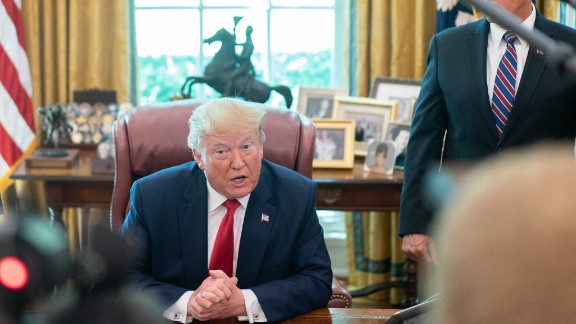
"We're going to bomb the hell out of them if they violate the agreement," Trump said at a press conference. "I want them to honor the agreement." Earlier he sharpened the warning: "If I don't like it, if they don't behave, we'll go right back to dropping bombs right smack in the middle of their head." Iran's leadership chose not to answer in kind. Its leaders did not address the new threats while celebrating the moment, releasing photographs of what is believed to be the first agreement signed by both a U.S. and Iranian president since the Islamic Republic's founding in 1979.
War spread through markets before diplomacy tried to reverse it
The distance between celebration and coercion matters because the war that produced this agreement changed the economics of far more than Iran. The U.S. and Israel launched the war on Iran on February 28. It quickly spiralled into a regional conflict that killed more than 7,000 people, mostly in Iran and Lebanon, drove up energy prices, renewed inflationary pressures and sparked concerns about a major food supply crisis in developing countries. The ceasefire is therefore not simply a diplomatic event. It is an attempt to reverse shocks that spread through shipping lanes, commodity markets and household budgets far beyond the Gulf.
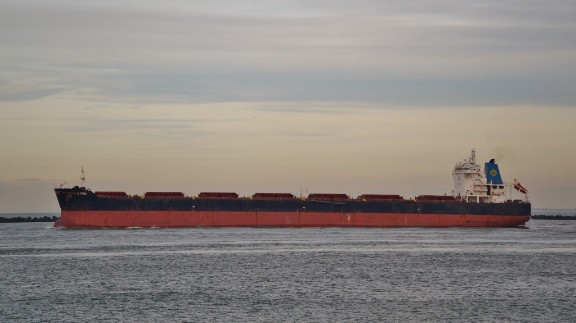
Those shocks were concentrated in one channel. The ongoing military escalation disrupted shipping flows through the Strait of Hormuz. The ripple effects extended to energy markets, maritime transport and global supply chains. Higher energy, fertilizer and transport costs, including freight rates, bunker fuel prices and insurance premiums, threatened to increase food costs and intensify cost-of-living pressures. The shock arrived as many developing economies were already struggling to service their debt, with tightening fiscal space and limited capacity to absorb new price shocks. A ceasefire that reopens Hormuz does not erase those vulnerabilities. It merely removes one source of pressure.
Iran enters the agreement from a position that looks stronger than it did before the fighting. Lead negotiator Mohammad Baqer Qalibaf told state television: "Everything we sought to achieve through military action, we obtained several times over through negotiation; it was not even comparable." The deal itself appears to support his claim. It includes the unfreezing of billions of dollars in Iranian assets. Iran also retains structural advantages that predate the war. Its proven reserves are equivalent to 290.1 times its annual consumption levels, meaning there would be about 290 years of oil left at 2024 consumption levels excluding unproven reserves.
Peace arrives while the structures built for conflict remain intact
More important is how Iran adapted while sanctions remained in force. Financial transactions related to its oil exports are typically conducted in yuan through smaller Chinese banks, limiting the ability of Western authorities to track payments and enforce sanctions. Once Iranian oil reaches China, it is reportedly rebranded, often as Malaysian or Middle Eastern crude, and sold to independent Chinese refineries operating with fewer regulatory constraints. It is widely believed this arrangement has allowed Chinese companies to save billions of dollars, while Tehran has greatly benefited from the continued revenue. Even before the memorandum promised sanctions relief, Iran had built channels designed to outlast sanctions.
That is why the agreement's most revealing provision may not be the ceasefire itself. The 14-point agreement extends a ceasefire announced in April by another 60 days, including in Lebanon, to allow negotiations on a final truce. Those sixty days sit beside Trump's warnings, beside Iran's sanctions-resistant oil trade and beside a market already celebrating the reopening of Hormuz. The treaty promises permanence while every major actor preserves the tools to reverse it.
For now, the easiest number to watch is still the oil price. But the harder fact is elsewhere: the memorandum waives U.S. sanctions, unfreezes Iranian assets and commits $300 billion to reconstruction, while Tehran continues to rely on pricing flexibility, alternative payment mechanisms and export networks built to survive sanctions. The agreement does not replace the system Iran created under pressure. It leaves that system intact, and that may prove to be the most durable outcome of the war.