Memory becomes the infrastructure layer beneath the AI boom
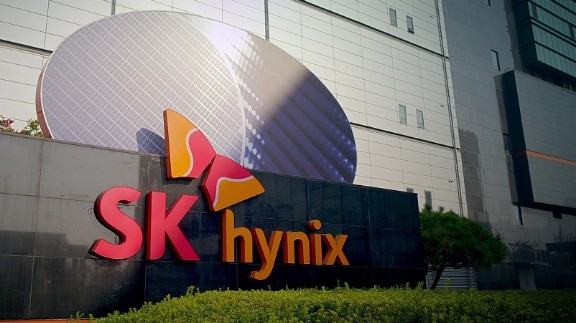
South Korea’s benchmark KOSPI index has doubled in value so far in 2026. At the center of the rally sits SK Hynix, now valued at 1.66 quadrillion won ($1.10tn), after its shares rose nearly 2 percent on Friday. The speed of the ascent has compressed two decades of industrial rehabilitation into a single market cycle. The company that once stood near bankruptcy now trades among the smallest club in global capitalism.
The gains have not emerged from software platforms or consumer applications. They came from memory. SK Hynix’s operating profit surged five-fold year-on-year in the first quarter, topping 37.6 trillion won, while revenue climbed three-fold to 52.6 trillion won. Another filing described a business so distorted by pricing power that quarterly profit exceeded the previous quarter’s entire revenue. The revenue engines were HBM, DRAM and enterprise SSDs, the hardware layers beneath the AI boom that investors spent much of the past three years treating as interchangeable commodities.
That assumption has broken down fast enough to reorder equity markets. The iShares MSCI South Korea ETF has risen 303.3 percent in U.S. dollar terms since the start of 2025, while the SPDR S&P 500 ETF gained 29.9 percent over the same period. Korean stocks now trade at roughly 10x forward P/E. A country long viewed through the lens of export cyclicality suddenly occupies the center of global AI capital formation, and money managers who once treated Seoul as a manufacturing proxy now price it like infrastructure.
Industrial bottlenecks replace consumer platforms as the market’s organising principle
The concentration is extraordinary. More than a quarter of all capital expenditure by South Korean public companies came from AI-producing firms in 2024, according to a Bank for International Settlements analysis of 1,246 firms across the AI supply chain. The United States stood slightly lower at 23 percent, while Japan registered 4.1 percent and China 2.6 percent. South Korea has reached parity with the U.S. in another metric that matters more to investors than slogans: AI firms account for 38.5 percent of total market capitalisation and 12.5 percent of revenues among listed companies in both countries.
That dependence has moved from the market into state policy. President Lee Jae Myung approved a 2026 budget allocating 10.1tn Won to AI, triple the previous year’s level. AI and automation now sit at the center of South Korea’s strategy against slowing growth and demographic decline. Jung Kim of the Korea Advanced Institute of Science and Technology described the shift more bluntly: South Korea stopped treating AI as a technology sector and started treating it as critical national infrastructure. Once governments classify an industry as infrastructure, they stop tolerating shortages the way markets do.
The scramble for supply has already redrawn the geography of trillion-dollar corporations. SK Hynix is one of only four non-U.S. companies currently worth at least $1tn, alongside Samsung Electronics, Taiwan’s TSMC and Saudi Aramco. Only 14 companies in history have crossed the trillion-dollar threshold. The list increasingly resembles a map of chokepoints rather than brands: memory, foundries, oil. Financial markets spent a decade rewarding scale in consumer ecosystems; they now reward whoever controls industrial bottlenecks.
Scarcity delivers leverage until concentration turns market volatility into political risk
South Korea’s leverage grows precisely because rivals cannot expand fast enough. Micron and Samsung Electronics also crossed the trillion-dollar milestone this month, driven by a global shortage of DRAM and NAND memory chips. Shortages transfer power upstream. Buyers lose negotiating leverage first, then margins, then strategic flexibility. The companies supplying the components begin dictating investment cycles for everyone else.
Yet concentration cuts both ways. Taiwan’s GDP has surged on chip exports, even as some Taiwanese say they feel excluded from the gains. South Korea shows similar strains beneath the market euphoria. The same economy that benefits from AI-linked capital expenditure now depends on a narrow cluster of firms for growth, export momentum and equity performance. When one sector carries national growth, volatility stops being a market event and becomes a political one.
Investors have seen this movie before, though in a different commodity. PetroChina became the world’s first trillion-dollar company in 2007, only for the 2008 global crisis to erase three-quarters of its market value. Oil then occupied the role semiconductors hold now: a strategic input treated as structurally scarce. The collapse did not destroy demand for energy. It destroyed the assumption that scarcity alone guaranteed durable valuations.
States begin to trade on whether the world can function without their infrastructure
SK Hynix enters this phase with unusual financial strength. The company ended the quarter with 54.3 trillion won in cash and cash equivalents against 19.3 trillion won in debt, leaving net cash of 35 trillion won. Management expects AI inferencing to sustain DRAM and NAND demand. That balance sheet gives Seoul a different form of geopolitical insulation than export powers usually possess. Countries dependent on foreign capital rarely become the place where the world’s largest technology companies compete for supply.
The deeper transformation lies in how markets now value states themselves. South Korea’s rise no longer rests primarily on automobiles, shipbuilding or consumer electronics. Its valuation increasingly reflects whether global AI systems can function without Korean memory chips. In earlier cycles, governments protected banks because banks underpinned the economy. Seoul now protects semiconductor capacity for the same reason: when infrastructure becomes indispensable, the companies that own it stop behaving like corporations and start resembling sovereign assets.