
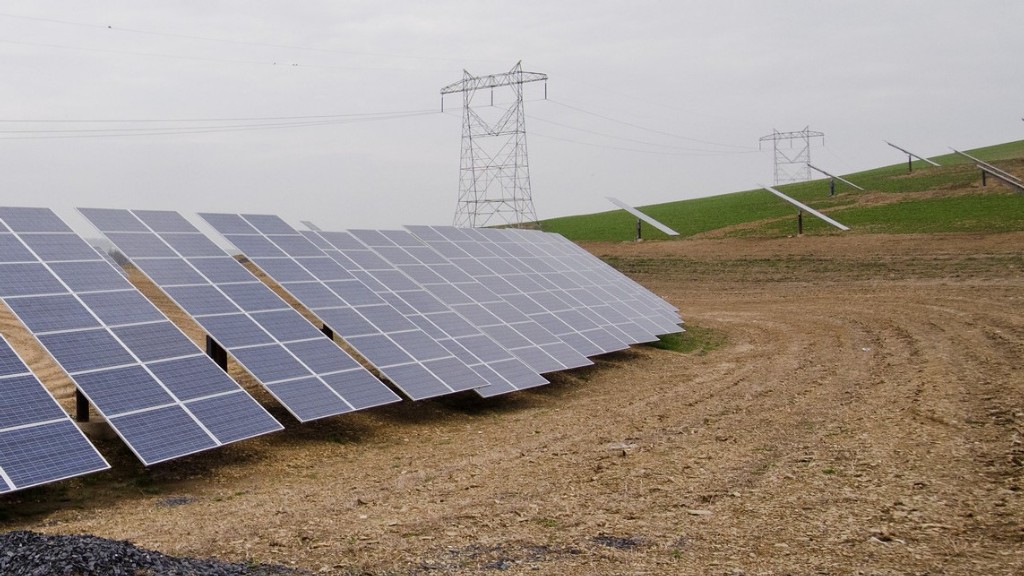
The Spanish developer's advance occurred during a much broader recovery in European equities. Banco Santander gained 4.83%, BBVA climbed 4.28%, and Spain's Ibex 35 rose 2.69% by mid-session.[3] The Stoxx Europe 600 subsequently closed 1.8% higher, supported by banks, luxury companies and renewable-energy shares.[6] Solaria participated in an advance that extended well beyond businesses positioned to benefit from American energy legislation. Its 4.67% increase establishes an immediate repricing, but does not isolate how much of that movement reflected expectations about renewable tax incentives.
Democratic control creates a route to restoring tax credits, but not a guarantee of enactment
Those expectations nevertheless have an identifiable legislative basis. Donald Trump signed the 2025 tax legislation that substantially curtailed incentives established under the Inflation Reduction Act of 2022.[7] The restrictions affect the Section 45Y clean-electricity production credit and Section 48E investment credit, with qualifying wind and solar projects generally facing a December 31, 2027, operating deadline unless statutory exceptions apply.[8, 9] The construction-start transition deadline has already passed, leaving project completion and compliance with eligibility requirements central to developers seeking tax benefits.[9]
Democratic control of Congress has prompted energy-industry advocates to discuss restoring or extending those incentives during 2026 or 2027. The possible negotiations could also encompass manufacturing credits.[4] That creates a plausible route toward more favorable economics for qualifying American projects, although congressional control has not itself changed their tax treatment. Any restoration would require legislation capable of passing both chambers and securing presidential approval or overcoming a veto. Trump signed the restrictions being reconsidered, making the route to enactment a separate condition from the election outcome.[7]
The potential financial benefit is concrete enough to explain why renewable companies responded to the prospect. Under the 2022 Inflation Reduction Act, developers gained the ability to sell qualifying tax credits to other businesses, converting future tax advantages into cash available for project construction.[10] A developer unable to use its full credits against its own tax liability can transfer them to a buyer at a discount, obtaining financing without necessarily relying on the more complicated structures previously required to monetize those benefits.[10] Restoring restricted incentives could therefore improve financing economics for eligible US projects. The benefit would depend on which credits returned, their duration and the facilities legally entitled to claim them.
Solaria's European portfolio lacks the direct subsidy exposure evident at First Solar
That eligibility condition limits the relevance of the policy to Solaria. Its disclosed portfolio comprises 4.85 GW in Spain, 382 MW in Italy and 375 MW in Portugal. Although some developments may use power-purchase agreements, their stated financing structure does not depend on renewable support mechanisms.[1] Nothing in that geographic and contractual profile provides a direct route from restored American tax credits to higher Solaria project income. A sustained valuation increase would instead require either identifiable US-linked earnings exposure or a higher market valuation for renewable businesses irrespective of their access to American subsidies.
First Solar provides a more direct test of the policy's financial importance. On October 13, Morningstar's reduced valuation reflected concern that expiring US credits and competitive pressure could weaken profitability, notwithstanding growing electricity demand from artificial-intelligence data centers.[5] The analyst assessment demonstrates that American incentive policy can influence expectations for a US-exposed solar manufacturer's earnings. It does not quantify the additional profit First Solar would earn from restored credits, and competition remains a separate constraint.[5] Even so, the company's valuation has already been examined through a policy mechanism that cannot presently be traced through Solaria's disclosed European portfolio.
Restoration would also face restrictions beyond the headline credit deadlines. The 2025 legislation introduced requirements concerning prohibited foreign entities and material assistance, affecting the eligibility of certain projects and manufacturing activities for Sections 45Y, 48E and 45X.[8, 9, 11] Treasury and the Internal Revenue Service issued guidance during February 2026 addressing aspects of those restrictions.[9] Consequently, any future legislation's treatment of sourcing, ownership and qualifying facilities could determine which American businesses actually obtain the incentives. Congressional agreement on extending credits would not necessarily produce equivalent benefits across the renewable industry.
Broader market gains complicate the case for a subsidy-driven rally
There is also a credible explanation for Solaria's increase that requires no improvement in its projected cash flows. The election coincided with falling government-bond yields, lower oil prices and a weaker dollar. The US 10-year Treasury yield declined 5.1 basis points to 4.91%, while Brent crude fell 2.67% to $100.87 a barrel.[2] European financial stocks and other previously pressured sectors recovered alongside renewables.[6] These simultaneous movements are consistent with a broader reassessment of political uncertainty and financial conditions rather than a narrowly targeted repricing of clean-energy subsidies.
The election itself was not entirely unexpected. On October 9, Polymarket assigned Democrats a 91% probability of capturing a congressional chamber.[12] That estimate did not establish that control of both chambers was fully anticipated, but it indicates that at least some probability of a changed political balance was already reflected in expectations before November 4. The subsequent rally cannot therefore be treated as a direct measurement of newly anticipated solar subsidies. Solaria's outperformance occurred amid several concurrent developments capable of influencing European share prices.
The decline in defense shares offers another example of the danger of assigning a single political explanation to market movements. BAE Systems, which obtains almost half its revenue from the United States, fell nearly 6% earlier in the session before recovering to a loss of roughly 2%.[2] Defense stocks weakened while renewables advanced, but the opposing moves do not demonstrate that capital was transferred from one industry to the other. The same evidence cannot establish that money entering Solaria represented a deliberate allocation toward future American tax-credit beneficiaries.
Legislation and company earnings disclosures will determine whether the revaluation lasts
The next consequential development would be a formal congressional proposal specifying the treatment of Sections 45Y and 48E, together with any restoration of Section 45X manufacturing incentives. The credit rates, eligibility conditions and duration would determine the potential benefit to qualifying businesses. Recorded votes, a viable presidential approval path and eventual Treasury implementation rules would establish whether that legislative possibility can produce financial consequences. An official fiscal assessment would also establish the cost to the US government, rather than relying on estimates associated with the earlier Inflation Reduction Act, which projected $40 billion–$60 billion in additional annual credits.[10]
For First Solar, the decisive subsequent evidence would be revised financial guidance connecting any restored incentive to identifiable earnings or cash flow. For Solaria, the requirement is more demanding: a company disclosure would need to establish eligible US-linked operations, revenue or financial sensitivity that connects the American legislation to its own results. Without that connection, continued share-price strength would represent a sustained change in how the market values its business rather than a demonstrated increase in cash generated by the proposed incentives.
December 31, 2027, provides a specific point for judging both developments. Enactment of restored credits by that date would establish the policy condition, while Solaria's share price could be compared with its November 3, 2026, pre-election close. Restoration accompanied by a retained price increase would support the case for a lasting revaluation; failure to restore the credits combined with a complete reversal of the election gain would undermine it. The critical financial test remains with Solaria itself: its documented 5.6 GW European portfolio does not depend on renewable support schemes, while the American policy change associated with its 4.67% rally has yet to establish a corresponding claim on the company's earnings.[1, 3]