Europe's electric transition reaches a constraint few expected
212,387 battery electric vehicles were registered across 17 major European markets in May. The number matters less for its size than for what sits behind it: BEVs captured a record 23.6% market share, and new EV registrations rose 34% year-on-year across markets representing more than 90% of European Union and European Free Trade Association car sales. Europe's electric transition has spent years searching for a catalyst. This time it may have found one in a place few carmakers wanted to look.
Fuel price spikes linked to the Iran war have lifted EV sales across Europe again. The effect is immediate. Renault's EV order book has risen by 50% in some countries since the Iran war began in late February, according to chief executive François Provost. The surge arrived not during a period of economic calm but amid higher fuel costs and supply disruption. Consumers who delayed switching now face a simpler calculation: pay more at the pump or move to electricity.
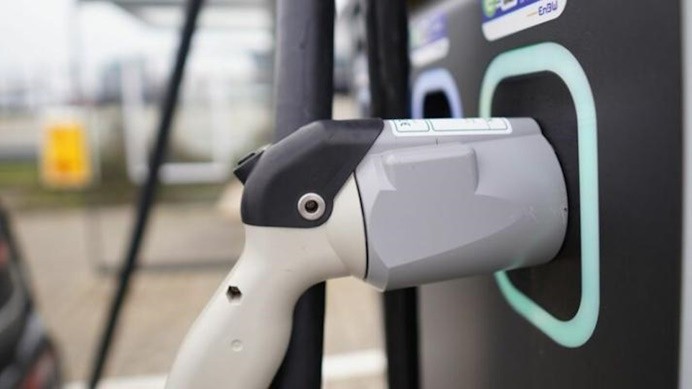
The timing matters because Europe's car market was already shifting. Automakers are rolling out cheaper EVs in Europe, attacking one of the industry's most persistent obstacles: higher upfront costs. Industry experts say improvements in charging infrastructure and a wave of more affordable models, including from Chinese automakers, are helping make EVs more mainstream. The war did not create demand. It accelerated a trend already under way and exposed how quickly buying decisions change when energy security becomes personal.
Demand is rising faster than manufacturers expected
The numbers show the shift spreading unevenly but decisively. France posted a 29.5% electric car market share in May. Germany stood at 25%, while German BEV registrations rose 41% year-on-year in the first five months of the year. Italy remained the fastest-growing market, with registrations doubling so far this year, helped by subsidies. Northern Europe is further ahead still: Denmark reached a BEV penetration rate of 78.7%, while Sweden reached 41.2%. Geography no longer determines whether electric vehicles can scale. The question is what now constrains them.
For Renault, the answer is capacity. Provost says the company has no problems sourcing batteries. Demand is the bottleneck. "We're currently exceeding the capacity (of our suppliers) because of the war in Iran," he said. The company is not retreating from the surge. It is setting up a task force and considering additional production shifts at EV factories in Douai, Maubeuge and Novo Mesto in the second half of the year. The pressure is not theoretical. It is already arriving at factory gates.
Yet even Renault questions how durable the moment is. Provost predicts growth will decrease if fuel prices fall. Ford Europe's Jim Baumbick said the war has "increased customers' interest" in EVs but cautioned against seeing it as a lasting shift. Their caution sits awkwardly beside the broader market data. Europe's transition toward vehicle electrification continues to accelerate. Year-on-year growth reached 51.3% in March and 34.1% in April. Battery-electric cars accounted for 19.7% of the EU market up to April, compared with 15.3% a year earlier. Meanwhile, the combined market share of petrol and diesel cars fell to 30.2% from 38.1%.
The market has moved beyond a temporary shock
The industry's anxiety is understandable. A demand surge driven by geopolitics feels reversible. But the market increasingly behaves as though it is not. Hybrid-electric vehicles now capture 38.2% of the EU market. Consumers are buying electrified vehicles across price points and technologies. Governments continue to support the shift with tax benefits and incentives, and the market continues to benefit from strong consumer demand for electrified technologies. Even as Chinese automakers expand into smaller and cheaper segments, local manufacturers still hold seven of the ten best-selling BEV models.
The uncomfortable fact is that Europe's electric transition no longer depends on oil staying expensive, on war remaining unresolved, or on a single year's subsidies. The Iran war may have accelerated demand, but it also revealed something more consequential: when fuel insecurity pushed consumers to act, Europe's manufacturers discovered that supplier capacity, not consumer appetite, had become the constraint. That is not a forecast. It is the condition already sitting inside Europe's car industry, and it has not yet been fully priced in.