Energy shocks and inflation persistence reshape the Federal Reserve outlook
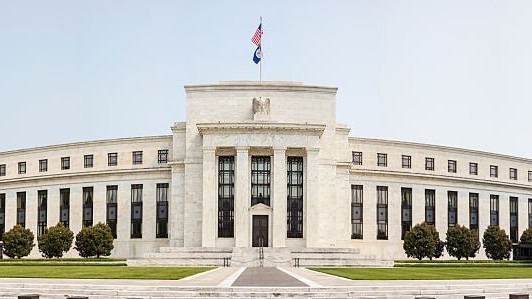
Inflation has been stuck above the Federal Reserve’s 2% target for more than five years, and the path back toward it has not moved in a straight line. recent progress has been undone by the war with Iran, even as the war with Iran appears to be cooling in the latest data. The effect is not symmetry but lag: prices that rose on energy shocks do not unwind when the shock fades. They persist.
That persistence has altered the internal logic of policy. Taken together, that means Fed officials can feel more comfortable raising rate to focus on inflation rather than employment. Fed officials feel comfortable raising rate under conditions where inflation remains structurally above target, reinforced by the view that the Fed needed to see progress on a multitude of fronts before confidence returns. The mandate has not changed. The tolerance for delay has.
Political pressure and institutional strain complicate monetary policy decisions
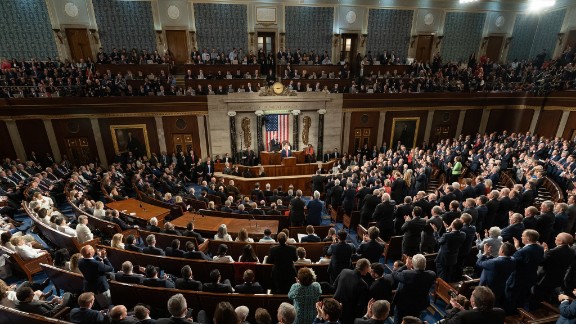
But the Fed is not operating in a vacuum. Trump pressure is slowing the Fed’s inflation response, according to an ex-official, as Rosengren told CNN that the fact the Fed wants to wait to tighten partly reflects the pressure being put on it by the administration. The pressure has not been abstract. The Justice Department even investigated Powell, embedding political friction directly into the institution’s operating environment. Monetary policy, in this reading, is no longer only about inflation and employment. It is also about institutional endurance.
That friction is already visible in market pricing. Wall Street long-term interest rates have climbed in part because of concerns about Fed independence. Rosengren’s diagnosis is not directional but diagnostic: People have become a little less confident the Fed will be serious about hitting the 2% inflation target. The mechanism is straightforward. When credibility weakens, term premia widen. When term premia widen, policy loses control of the long end.
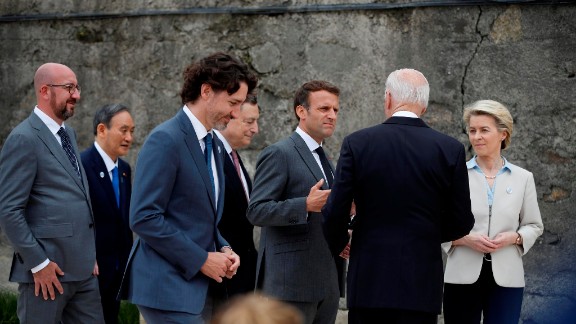
Into that gap enters the question of leadership signaling. Wall Street is watching Warsh lean, with analysts hope to get a better grasp of whether he is leaning ‘hawkish’ or ‘dovish.’ The distinction is not stylistic. A ‘hawk’ refers to someone who is concerned about inflation and prefers tighter policy, while a dove prioritizes growth and labor market support. The uncertainty is not about definitions. It is about which constraint will dominate.
The stakes of that ambiguity are already priced in. If Warsh isn’t hawkish enough, bond traders may conclude he isn’t doing enough to restrain inflation, which could push yields higher. If he is perceived as too restrictive, stock market traders could get spooked and trigger a sell-off. It’s significant for markets. There is no neutral interpretation left for tone.
That is complicated by history that does not align neatly with present expectations. Warsh has a history of leaning more hawkish during his previous tenure, yet Warsh sounded more dovish in the run-up to his appointment. The result is not synthesis but contradiction, and markets do not price contradictions without a discount rate attached to uncertainty itself.
Leadership uncertainty narrows the corridor for market expectations
Analysts have begun to describe the constraint in operational terms. “His comments will be under a microscope,” Louis Navellier said. Krishna Guha framed it as a narrowing corridor: “He still has a narrow path to walk between being too sunnily dovish… and being too hawkish”. The language is directional, but the constraint is structural. Every deviation risks repricing.
That repricing is occurring against a household backdrop already showing strain. the saving rate fell to 2.6% from 3.2%, as Personal income was flat and Spending rose 0.5%. Consumption is being maintained by drawing down buffers rather than expanding income. consumers sacrificed saving to sustain spending, a pattern that leaves less resilience if rates tighten further.
Across these layers—energy shocks that do not fully reverse, political pressure that does not fully dissipate, and leadership uncertainty that does not resolve into a single signal—the Fed’s policy stance becomes less a decision point than a negotiated equilibrium. The system is not paused. It is absorbing conflicting forces without clearing them.
The consequence is already visible in expectations. People have become a little less confident the Fed will be serious about hitting the 2% inflation target. That sentence does not describe sentiment alone. It describes pricing power migrating away from the central bank, one basis point at a time.