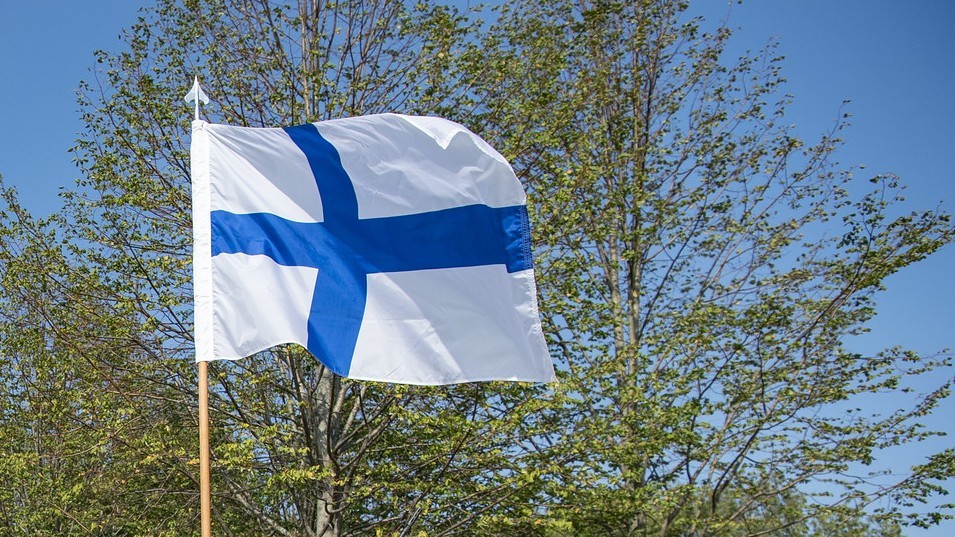
Finland spent decades writing nuclear weapons out of its law. On Wednesday, parliament voted to lift that ban, erasing provisions that had stood since 1987 and repealing restrictions on the import, production, possession and detonation of nuclear explosives. The vote was not close. Defence Minister Antti Häkkänen said parliament approved the amendment with a two-thirds majority, calling it a "historic reform" that strengthens Finland's security and that of the alliance.
The legal change arrives barely three years after Finland joined NATO in April 2023 in response to Russia's full-scale invasion of Ukraine. That decision ended decades of military non-alignment and roughly doubled NATO's border with Russia. Finland's accession already altered the alliance's geography. The nuclear vote alters something harder to reverse: the assumptions that governed Finnish security policy for a generation.
That shift has been building for years. Häkkänen said the government spent years studying the issue, holding discussions with nuclear-weapon states and other allies, and assessing how Finland's security could best be strengthened within NATO. He admitted the scale of the argument inside government. "The overall nuclear weapons policy has been one of the most challenging issues in the Ministry of Defence during this parliamentary term," he said. Countries do not revisit foundational taboos unless they believe the world that produced them has already disappeared.
Security assumptions have changed faster than institutions
Finland's relationship with NATO once rested on the opposite assumption. The country cooperated extensively with the alliance for decades while not aspiring to membership. Its partnership was based on military non-alignment and a firm national political consensus, a position NATO fully respected. That equilibrium ended not because Finland changed first, but because the security environment around it did.
The irony was obvious enough that even NATO's closest allies said it aloud. US Secretary of State Antony Blinken said Russia's leader, by attacking his neighbour, had triggered exactly what he had sought to prevent. Finland's accession was described as a setback for Vladimir Putin, who had repeatedly complained about NATO expansion before Russia's invasion of Ukraine. Moscow understood the strategic loss immediately. Kremlin spokesman Dmitry Peskov warned Russia would be "watching closely" what happens in Finland and called NATO enlargement a violation of Russia's security and national interests.
The military architecture Finland is building suggests Helsinki expects that tension to endure. Its 2025 defence budget stands at about €6.5bn. Base defence spending runs near 2 per cent of GDP, but the F-35 procurement pushes the total to 2.8 per cent. Finland has announced a trajectory to 3 per cent by 2029. Yet NATO is already moving beyond that benchmark. Alliance members have agreed to raise defence and security spending to 5 per cent of GDP by 2035, with at least 3.5 per cent dedicated to core defence requirements and up to 1.5 per cent directed toward security-related spending and the alliance's defence industrial base.
Military strength now depends on economic and legal endurance
Finland enters that new era with advantages few allies possess. It maintains about 23,000 professional soldiers and trains roughly 20,000 to 25,000 conscripts each year through a universal-service system. Its wartime-ready reserve numbers 280,000, backed by a broader pool of around 900,000 citizens in a country of 5.5 million. Personnel costs remain modest relative to Western peers because of the conscript model. The army already fields Leopard 2A6 tanks, K9 Thunder self-propelled howitzers and CV9030 infantry fighting vehicles. Finland is not scrambling to build a military culture. It is scaling one that already exists.
But the numbers point to a quieter pressure. The Bank of Finland has modelled that sustained defence spending above 3.5 per cent of GDP could create moderate capacity pressures in construction and engineering. The alliance's new target places Finland precisely in that territory. The question is no longer whether Finland can afford to defend itself. It is whether the institutions, industries and laws built for a country that once prized military distance can adapt to a country that now treats deterrence as permanent.
That is what parliament's vote really acknowledged. Finland did not simply remove a prohibition from the Nuclear Energy Act. It repealed a legal barrier that had banned the import, production, possession and detonation of nuclear explosives, and it did so after a two-thirds parliamentary majority concluded that Finland's security now depends on a different set of assumptions. The uncomfortable truth is not that Finland has changed course. It is that the political consensus which once kept nuclear weapons outside Finnish law now exists to make sure the option is never ruled out again.