Click to load the interactive map
Strait of Hormuz closure follows repeated escalation pattern
The Strait of Hormuz was closed again after a familiar sequence of escalation that now reads less like a crisis than a procedure. The Iranian military says it has closed the Strait of Hormuz in response to Israel’s attacks in southern Lebanon, repeating a move first taken after earlier US and Israeli strikes on Iran. The announcement was framed not as rupture but continuation, as if the waterway had become a lever to be pulled rather than a boundary to be respected.
Within hours, the tone hardened. Iran’s Revolutionary Guard Corps Navy warned that “Do not approach the Strait of Hormuz; otherwise, your security will be jeopardized,” turning a shipping lane into an explicit security perimeter. The warning did not need enforcement to matter. It landed on a market already primed by previous closures and by the knowledge that the same passage carries a disproportionate share of global energy flows, including a channel that handles about 20% of the world’s oil and liquefied natural gas.
Fragmented agreements deepen regional contradictions
The closure did not emerge in isolation. It sits inside a political architecture that, on paper, was supposed to reduce precisely this risk. The US and Iranian presidents had signed an initial agreement aiming to end the war, including in Lebanon, with a commitment to further talks over the next 60 days. The Strait of Hormuz reopening was explicitly part of that framework. Yet Iran now argues that Israel’s continued operations in Lebanon represent a breach of that settlement, describing continued attacks in Lebanon as a violation of the agreement’s logic. The deal assumed de-escalation on one front would stabilise others. Instead, each front is now being used to invalidate the others.
That fragmentation has pulled the United States directly back into the attribution chain. The Iranian military accused the US of violating the US-Iran deal, citing failures to implement clauses tied to a broader 14-point memorandum on ending military operations. In parallel, Iran’s top joint military command pointed to Israel’s “continuous and relentless violation of the ceasefire in southern Lebanon” as justification for re-closing the strait. Responsibility is no longer linear. It is distributed across agreements that contradict the events they were meant to contain.
Those contradictions are most visible in Lebanon, where formal ceasefire language and operational reality have diverged. The Israeli military confirmed a ceasefire had gone into effect, while also stating its forces would “continue to remove immediate threats”. Israel, according to its own officials, has no intention of withdrawing forces from Lebanon, even as it insists the conflict with Hezbollah is separate from the war on Iran. Hezbollah, in turn, accuses Israel of repeated violations and asserts its right to “defend their land and sovereignty”. The ceasefire exists as timestamped fact, not as shared condition.
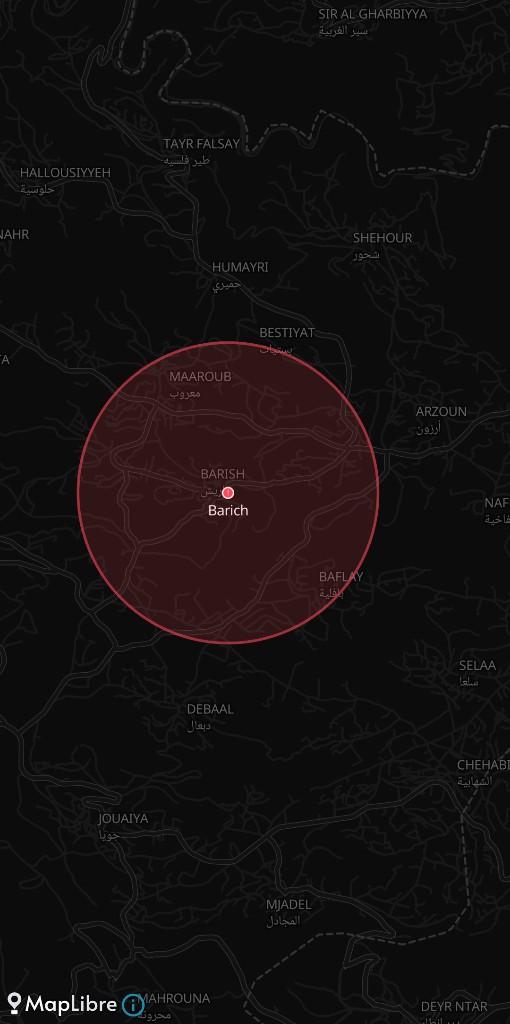
On the ground, that distinction is collapsing into casualty reports. State media in southern Lebanon reported that a family of four was killed in the town of Barich following Israeli airstrikes. The Israeli military said it had struck “dozens” of targets after Hezbollah fired more than 50 projectiles at its forces. Each side now treats escalation as compliance with the other’s breach. The logic is circular, but the consequences accumulate in the same geography.
Energy markets and security implications of a functioning chokepoint under strain
What matters for markets is that the same geography now overlaps with the world’s most sensitive energy corridor. The Strait is not merely contested; it is described as effectively closed in operational terms. Insurance has become unavailable or prohibitively expensive, and seafarers are unwilling to transit, meaning the channel is effectively closed even when ships technically move through it. A separate assessment notes that ship traffic is at a near-standstill, with only vessels paying informal arrangements for passage.
That does not mean movement has stopped entirely. US Central Command said safe passage remained intact and reported that 55 merchant ships transited after Iran’s announcement, with commercial traffic described as increasing. The ambiguity is not incidental. It reflects a split between tactical navigation and systemic risk: ships may pass, but only inside a corridor where every passage is priced against the possibility of interruption, delay, or reprisal.
Energy markets have responded to that uncertainty rather than to any single closure announcement. Brent crude ticked higher but remained on track for a weekly fall after ceasefire developments elsewhere, while futures were quoted at $80.38 a barrel. The price movement captures a tension that is no longer geopolitical in abstraction: stability in one theatre competes directly with volatility in another, and neither resolves the underlying exposure of supply routes that cannot be rerouted.
That exposure is now being reframed in strategic terms beyond oil itself. The US-Iran crisis is described as shifting the case for renewables into a security argument, with domestic clean power seen as less exposed to chokepoints. China is accelerating hydrogen use, while India and the EU review fuel mandates through a security lens. Procurement decisions are beginning to follow that logic. The Strait’s instability is therefore not only disrupting flows; it is altering the perceived hierarchy of energy systems.
What remains unresolved is not whether the Strait of Hormuz is open or closed in a formal sense. It is whether closure has already become the default operating condition disguised as exception. When insurance retreats, when shipping continues only through informal clearance, and when 20% of global LNG still depends on a corridor described as effectively unusable, the distinction between blockade and passage becomes accounting. The most precise statement in the system is the least negotiable: the Strait is moving, but it is no longer functioning as a chokepoint that assumes movement will continue.