Legal risk shifts from product failure to institutional credibility
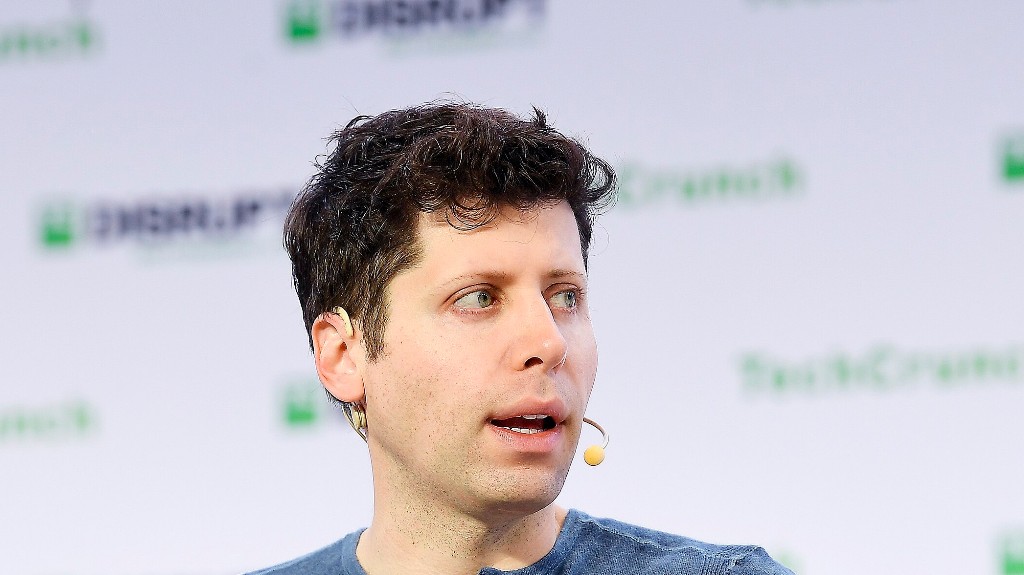
OpenAI and CEO Sam Altman were sued on Monday by Florida, but the detail that matters is not the headline. It is the allegation underneath it: the company suppressed internal safety warnings while pushing ChatGPT into mass use. Florida Attorney General James Uthmeier did not describe a technical failure. He accused the company of deceiving users about the true nature and dangers of the product. That distinction changes the legal terrain. A flawed product can be repaired. A company accused of knowing the risks while scaling anyway inherits a different kind of liability.
The state framed the case in language that sounds less like a dispute over software and more like the opening argument in a consumer-protection prosecution. Uthmeier called it “the first-in-the-nation state-led lawsuit against OpenAI and its CEO, Sam Altman.” He claimed OpenAI and Altman ignored internal and external safety warnings, put children at great risk, and allowed a dangerous product to reach millions of Floridians. The complaint reaches for physical consequence. It references two separate shootings in which alleged gunmen reportedly asked ChatGPT questions while planning their crimes. The pressure point is not whether the chatbot caused violence. The pressure point is whether a state can persuade a court that a general-purpose AI system belongs inside the same accountability framework as a consumer platform that knowingly exposed users to foreseeable harm.
OpenAI’s response was careful, but narrow. The company said its models repeatedly encouraged the individuals to seek real-world support, including from mental health professionals. It also said it cooperated with law enforcement in both cases. The company’s broader defense rests on scale and ordinary use: “ChatGPT is a general-purpose tool used by hundreds of millions of people every day for legitimate purposes.” That sentence does two jobs at once. It normalizes the product by volume while implying that misuse is statistically inevitable in systems deployed at planetary scale. But the larger the user base becomes, the harder it is to argue that edge cases are truly edges. Scale does not dilute scrutiny. It concentrates it.
Regulators are increasingly treating governance itself as the defective product
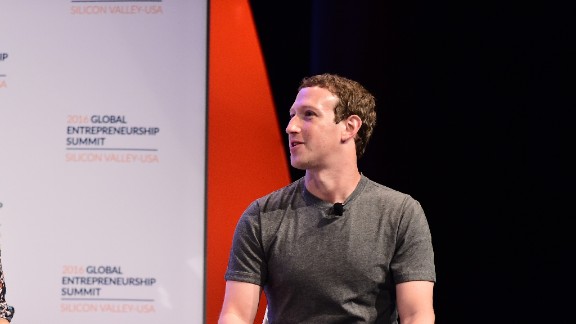
That is the lesson the technology industry has already paid to learn. Facebook paid a record-breaking $5bn penalty after regulators said the company violated a 2012 FTC order by deceiving users about their control over personal information. The settlement did not stop at money. It imposed unprecedented new restrictions on Facebook’s business operations and required the company to restructure its approach to privacy from the corporate board level down. The architecture of the punishment mattered more than the headline number. Regulators treated governance itself as defective.
The comparison matters because the allegations now surrounding OpenAI track the same institutional fault line. Facebook’s problem was not simply that user data leaked. Regulators argued the company’s internal incentives could not be trusted to police themselves. The settlement forced accountability mechanisms upward, into executive oversight and board structure. The Florida complaint points at a similar fracture in artificial intelligence: the possibility that safety warnings inside a company become operationally secondary once deployment and adoption accelerate faster than governance. If that framing hardens, AI regulation stops being a debate about outputs and becomes a debate about corporate control systems.
The industry already knows the problem is not static. One practitioner working in AI and data lifecycle management said the real challenge is not building systems but continuously validating them once they are in use, especially as data, context and edge cases shift over time. That observation cuts against the implicit promise behind rapid deployment. A model released into public life is not finished software. It is a moving system absorbing new contexts faster than any internal testing regime can fully anticipate. The period from mid-2023 to May 2025 was described as an evolution of “unprecedented velocity and scale.” Velocity is not neutral. It compresses the time available for institutions to discover whether their safeguards actually work outside controlled environments.
Mass adoption is arriving before independent oversight can catch up
That compression creates a second problem. Governance frameworks are now arriving after systems have already reached mass adoption. A 2023 book on “Responsible AI in the Enterprise” aimed to provide practical strategies for explainable, auditable and safe models. By the authors’ own account, the landscape was already dynamic before the acceleration that followed. The distance between deployment and oversight is widening precisely when companies are telling governments and consumers to trust safeguards they cannot independently inspect.
The uncomfortable parallel is that Silicon Valley has seen this movie before. Years after the Cambridge Analytica scandal, Meta’s $725m settlement is still paying out claims and users are receiving about $38 on average. The number is almost absurd in its smallness relative to the scale of the original platform. But it reveals something more important than whether compensation feels adequate. Consumer technology companies can absorb enormous penalties long after the products that triggered them have become socially indispensable. The business survives. The governance burden remains.
That is the structural condition now closing around OpenAI. The company insists it works continuously to strengthen safeguards, detect harmful intent and limit misuse when safety risks arise. But Florida’s lawsuit is aimed at something deeper than harmful prompts or criminal misuse. It targets the credibility of self-governance itself. Once regulators begin arguing that internal warnings were suppressed while adoption surged into the hundreds of millions, the relevant asset is no longer just the model. It is the company’s claim that it can be trusted to decide, on its own, when a system is safe enough to release. Facebook already showed what happens when regulators stop believing that claim. The expensive part was not the fine. It was the transfer of authority from the platform to the oversight structure built to contain it.
Cover photo CC-BY TechCrunch