The US government has rushed to close a major security loophole that allowed Chinese tech firms to use the world’s most powerful artificial intelligence chips for nearly a year. The gap was procedural, not technical. The US Department of Commerce issued guidance on May 31 after discovering that foreign subsidiaries of Chinese companies may have bypassed American trade bans. The route reportedly ran through overseas branches in countries such as Malaysia. Washington spent two years restricting exports because the US is believed to be at least two years ahead in AI chip design; then discovered the controls may have leaked through corporate geography.
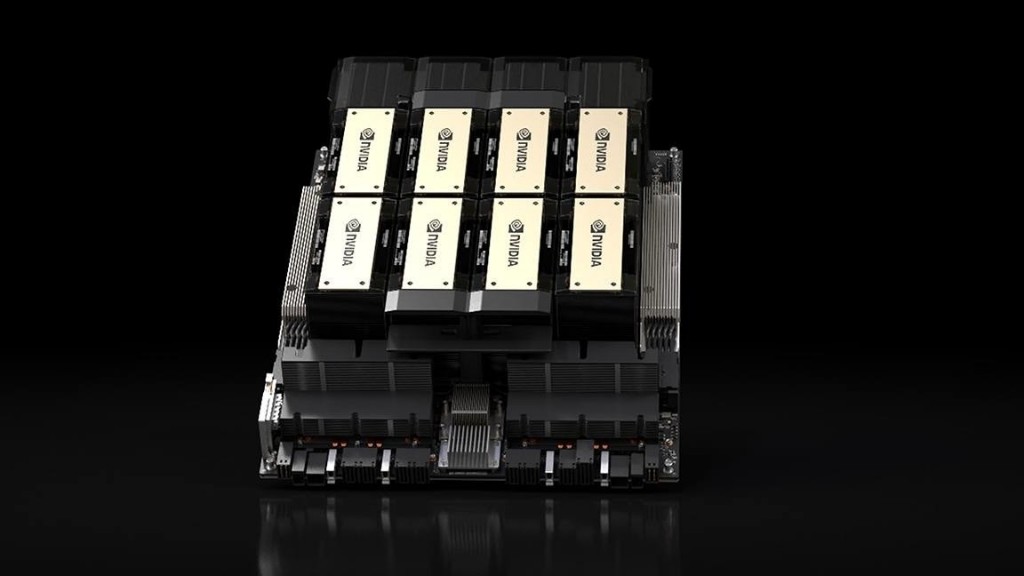
That matters because the company sitting at the center of the controls is no longer just selling chips. Nvidia holds more than 90 per cent of the AI chip market. Its InfiniBand technology originated from the Mellanox acquisition, and its AI server systems tightly integrate AI chips with InfiniBand networking. Chinese scrutiny is now moving toward whether Nvidia’s AI chip dominance is tied to bundling chips with InfiniBand systems and whether the company limits the performance of third-party networking alternatives. Those questions are not abstract antitrust theory. China’s previous investigations into Qualcomm and memory chipmakers ended with fines, revised sales strategies and settlements. Nvidia’s advantage rests precisely where regulators are beginning to probe.
Security moves from the edge of robotics to the centre of infrastructure
At the same time, Nvidia is extending its position beyond data centres and into machines that move through the physical world. Nvidia executives said their work with Unitree is aimed at improving the cybersecurity of robots used by researchers receiving US government funding. Software updates for robot subsystems will flow through Nvidia chips, where the code can be checked for authenticity. Nvidia’s Blackwell chips are being integrated directly into Unitree robot bodies, carrying over the same security architecture the company uses in data centres. Secure boot and confidential computing are intended to prevent robots from running malicious code or moving sensitive data without permission.
The practical effect is that Nvidia is turning hardware security into infrastructure. A chip no longer processes data; it authenticates the machine itself. The company says it plans to pursue similar robotics efforts outside China, including unnamed partners in the US, South Korea and Europe. Those plans are not yet public, but the direction is clear. Robotics firms are approaching commercialization quickly enough that analysts expect a divide between viable companies and those lifted mainly by hype. Korean robotics firms are already building war chests for expansion. Investors are split because the industry’s real bottleneck is becoming visible: not mechanical engineering, but trust.
The market for robotic cybersecurity barely existed when industrial robots operated inside isolated factory cages. That assumption is gone. Robotics technology is spreading across manufacturing, healthcare, logistics and agriculture. As robotic systems become interconnected with the Internet of Things, their exposure to cyber threats increases. The more essential these systems become, the more the potential for cyber attacks escalates. The logic is beginning to resemble cloud computing a decade ago: once machines become networked infrastructure, security stops being a feature and becomes the product itself.
Export controls aimed at hardware are colliding with systems built around trust
That transition helps explain why Nvidia can simultaneously lose ground in one strategic market while tightening control over the larger system around it. Jensen Huang said Nvidia has largely conceded China’s AI chip market to Huawei as US export controls and competition reshape the sector. Yet the company still reported record quarterly revenue of $81.6bn, while data-centre sales nearly doubled to $75.2bn. Nvidia is spending accordingly. Its latest twelve-month R&D expenses reached $20.829bn, roughly double the $10.539bn average over the previous fiscal years. The company is no longer defending a product cycle. It is financing an ecosystem in which chips, networking, security protocols and robotic operating systems reinforce one another.
That creates an awkward contradiction underneath Washington’s export strategy. The US has tried to block China from accessing Nvidia semiconductors needed for advanced military and commercial AI, because AI is expected to define the weaponry of the future. But the same restrictions are accelerating the fragmentation of the market Nvidia dominates. China’s pressure points now sit less in access to individual chips than in dependence on integrated systems controlled abroad. Nvidia’s response has been to make those systems harder to separate. Security verification, networking architecture and robotics controls increasingly travel together.
The pressure lands on the assumption that export controls can isolate hardware without restructuring the infrastructure built around it. Nvidia’s position still looks unassailable because the company dominates AI chips. But the structure underneath that dominance now depends on something far larger and harder to stabilise: that governments trying to fragment the AI supply chain will continue tolerating a private company becoming the security layer for the machines, networks and autonomous systems those same governments increasingly treat as strategic assets.