Russia’s saturation doctrine turns successful interception into strategic exhaustion
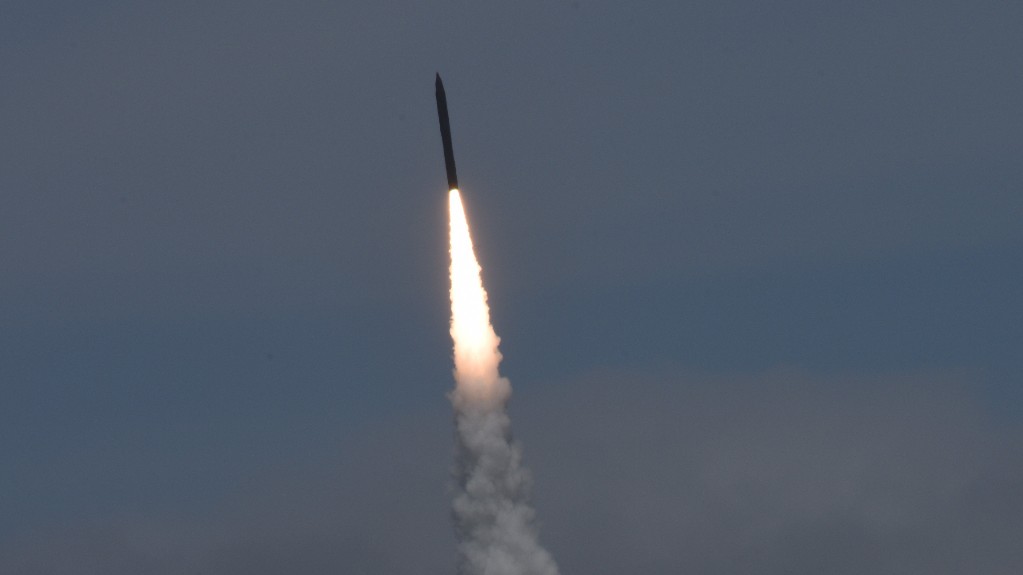
At least 11 people were killed after Russia launched 73 missiles and 656 drones at Ukraine, but the most revealing number in Tuesday’s assault was not the death toll. It was the ratio. Ukrainian air defences destroyed or suppressed 40 missiles and 602 drones. Yet 30 ballistic missiles, three cruise missiles and 33 drones hit targets across at least 38 locations. The system held and failed at the same time.
That contradiction now defines the war over Ukraine’s cities. Russia’s saturation doctrine exploits volume, multi-vector timing, and decoy integration to overwhelm layered defenses. The point is no longer simply to break through air defence. It is to force Ukraine to fire everything, everywhere, continuously. A critical asymmetry exists between mass attacks and smaller raids: attacks with more than 400 drones achieve roughly 94 per cent interception when all assets are mobilised, while smaller regional raids hit 50-80 per cent rates because they exploit coverage gaps. Russia does not need every missile to land. It needs Ukraine to defend against all of them.
Kyiv absorbed the consequence directly. A suspected missile strike triggered the collapse of a 24-storey residential block. People were thought to be trapped under rubble. Cars burned in the Obolon district after falling missile debris struck them. Thousands of residents took refuge underground in metro stations and shelters while rescue operations continued even as the air raid alert remained in effect. The city was fighting two battles at once: one against incoming missiles, another against the debris produced by stopping them.
Infrastructure does not fail all at once but through repeated cycles of repair under attack
Dnipro exposed a harsher logic. At least six people were killed and 36 injured, including a rescuer killed in a second attack as emergency responders arrived at the scene of the first. The sequence mattered. A strike that lands once destroys a building. A strike that lands twice traps the repair and rescue system inside the attack itself. The pressure moves from civilians to the institutions meant to keep civilians alive.
The same pattern reached the power grid. Electricity was cut for 140,000 residents of Kyiv. A transformer substation and high-voltage line were damaged. The attack damaged a company production site and 29 vehicles, including emergency response vehicles, excavators and loaders used by repair crews. Then the crews went back out anyway. DTEK engineers began work after receiving clearance from Ukraine’s emergency service and the military. By later in the day, utility workers had restored power to 110,000 residents, though more than 14,000 customers remained without electricity. The repair system still functions. That is precisely why it is now being targeted.
The strain is visible in the language officials use. Kyiv’s energy crisis is deepening after Russia pounded the power grid. “The situation now is the worst”. Officials and energy experts warn that Kyiv’s infrastructure is nearing its limits. Those limits are not abstract engineering thresholds. They are crews, substations, emergency vehicles and transformers forced into repeated cycles of destruction and repair under continuing attack alerts. Infrastructure does not fail all at once. It degrades by exhausting the systems that restore it.
Cheap decoys are forcing expensive vigilance across both defence and finance
Russia’s drone strategy is built around that exhaustion. Gerbera decoy drones constitute roughly 40 per cent of Shahed-type launches in mass attacks. Built from foam and cheap electronics, they carry Luneburg lens radar reflectors that make them difficult to distinguish from armed drones on radar. A defender confronted with a radar signature cannot afford to guess wrong. Every decoy therefore consumes the same scarce attention, interceptor coverage and response tempo as a live strike package. Cheap drones are being used to force expensive vigilance.
That imbalance is beginning to migrate from the battlefield into finance. Ukraine’s sovereign credit default swap spread stands at 550.90 basis points, a metric used by investors to gauge the credit risk associated with Ukrainian sovereign debt. The CDS level implies a probability of default of 9.18 per cent, assuming a 40 per cent recovery rate. The number matters less for what it predicts than for what it already assumes: that the costs of maintaining the state, the grid and the defensive shield around both are now structurally linked.
That linkage is visible on the streets before it appears on balance sheets. “Everything fell on my head, the glass, and the door blew off,” Olena Dniprovska said after the blast destroyed her apartment in Kyiv’s Podilskyi district. “Now I have nowhere to live, the apartment is completely destroyed”. Her description of the damage was brutally precise. “You can step straight from the room out on to the street.” That is what saturation warfare does when it succeeds. It removes the distinction between infrastructure failure and civilian life. The wall disappears first. The state disappears more slowly, one repair crew, transformer and emergency vehicle at a time.