Israel’s tactical advances are exposing gaps that battlefield adaptation has not yet closed
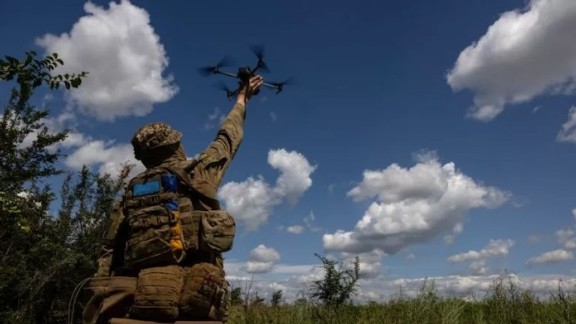
More than 300 members of Israel’s defense-tech community met on Tuesday for an urgent closed-door session to accelerate responses to Hezbollah’s fibre-optic and first-person-view drones. The meeting was assembled within days, after direct operational requests from IDF units fighting in southern Lebanon. One message, recalled by The CET Sandbox co-founder David Yahid, stripped away the abstraction that usually surrounds military procurement cycles: “a friend from a special ops unit deployed in Lebanon sent a message” asking, “What do you have [to fight] against fiber optic suicide drones?” The urgency was operational, not strategic. Israeli units already in the field were asking industry for something they did not yet possess.
That request arrived as the IDF expanded the manoeuvre in Lebanon, crossed the Litani River, and captured the Beaufort ridge, which Israel’s defence minister Israel Katz described as “one of the most important strategic points for defending the settlements of the Galilee and safeguarding the security of our forces.” The military followed the seizure with a sweeping evacuation order to areas south of the Zahrani river. Israeli military spokesman Avichay Adraee said residents “must evacuate your homes immediately.” The territorial movement and the evacuation order pointed in the same direction: Israel was no longer conducting a contained border operation. It was creating depth.
The deeper Israeli forces moved, the more visible the mismatch became between tactical advances and the systems protecting the troops making them. Israel’s largest defence contractor is developing hardware to combat explosive Hezbollah drones, including potential laser-based systems. That development effort is happening after Hezbollah drones killed Israeli troops in southern Lebanon, not before. The chronology matters. Israel’s defence industry is widely associated with layered missile defence and rapid battlefield adaptation, yet the gathering branded “Operation Northern Shield” existed because frontline units believed a threat was outrunning the available countermeasures.
Diplomacy is now reacting to territorial facts already created on the ground
The casualties explain the pressure. The Israeli army announced Sunday that one of its soldiers had been killed the previous day by a Hezbollah explosive drone, bringing the number of Israeli military deaths since early March to 25. On the Lebanese side, the death toll since March was 3,371, according to the Lebanese Health Ministry. The ministry also said an Israeli strike near a hospital in Tyre wounded 13 staffers and caused “significant damage”. The numbers do not describe a contained exchange. They describe a conflict settling into infrastructure, logistics and attrition — the kind of war in which adaptation matters more than declarations.
Diplomacy has started to move in parallel with the military escalation, not ahead of it. France requested an emergency meeting of the United Nations security council after Israeli forces seized Beaufort. French foreign minister Jean-Noel Barrot said “nothing can justify the continuation of Israeli military operations in Lebanon and its ever-deeper occupation of Lebanese territory.” At the same time, the Lebanon Broadcasting Corporation International reported that US secretary of state Marco Rubio is expected to announce a new ceasefire deal following talks in Washington due on 2 and 3 June. The sequencing is revealing. Negotiations are taking shape after Israeli forces crossed the Litani and after evacuation orders spread northward, which means diplomacy is attempting to stabilise facts already created on the ground.
The conflict has also begun to leak into markets and shipping lanes in ways that no ceasefire announcement can quickly reverse. Oil prices soared to four-year highs, with Brent for June delivery spiking more than 7% to $126.41 on April 30. At the same time, US Central Command said it had reached “a significant milestone” after redirecting the 42nd commercial vessel attempting to violate the blockade. On April 29 CENTCOM added that there are “41 tankers with 69 million barrels of oil that the Iranian regime can’t sell”, valuing the cargo at more than $6bn. Those figures expose the larger structure underneath the fighting in southern Lebanon. The battlefield is not only consuming soldiers and territory; it is beginning to immobilise commercial energy flows.
Military escalation, oil disruption and negotiations are now operating inside the same system
Iran’s position inside that structure became clearer as the military pressure increased. Iran’s top negotiator Mohammad Baqer Qalibaf said the country will not accept any agreement ending its conflict with the US unless there is certainty that the Iranian people’s rights are secured. He added: “Our only criterion is to achieve tangible results before we fulfil our commitments in return.” That is not the language of a state preparing to trade concessions for de-escalation. It is the language of a state measuring negotiations against material outcomes already being constrained elsewhere — including tens of millions of barrels of oil that CENTCOM says cannot reach market.
The uncomfortable truth running beneath the diplomacy is that Israel’s expanding campaign and Iran’s constrained oil exports are now part of the same pressure system. Israeli units are asking private defence firms for tools to stop drones that are already killing soldiers. Iran is signalling it will not move without guarantees tied to tangible outcomes. Oil prices have already reacted as though the disruption is structural, not temporary. The assumption still holding the diplomatic process together is that military escalation can continue while negotiations remain compartmentalised. But crossing the Litani River, redirecting commercial vessels, and stranding 69 million barrels of Iranian oil are not separate events. They are the same conflict landing simultaneously on territory, supply chains and balance sheets, and the price shock arrived before any of the actors involved demonstrated they can still contain it.