The contract that matters runs to May 2029 and pays $1.25 billion per month for access to a single facility in Memphis.
Anthropic did not buy optionality. It reached a deal to take the full output of SpaceX’s Colossus 1, a site that houses more than 220,000 Nvidia processors and is expected to deliver 300 megawatts of new capacity within a month. The scale is physical before it is financial: racks, power, cooling, land. The contract binds those constraints to one customer, on a timetable that assumes the machines will exist when promised.
SpaceX has already sold the same assumption twice. Its compute access deals with Anthropic and Google are worth roughly $26 billion a year combined and more than $70 billion in aggregate, provided neither contract is terminated before expiry. The revenue line is conditional on delivery. The contracts say so in plain language.
Contracts translate ambition into obligations that only silicon can satisfy
Google’s clause is blunt. If SpaceX does not provide access to the agreed GPUs by September 30, then after a one-month grace period Google may immediately terminate the agreement or accept fewer chips and pay less. After December 31, either party may terminate with 90 days’ notice. The revenue is not booked; it is rented, contingent on silicon showing up on time.
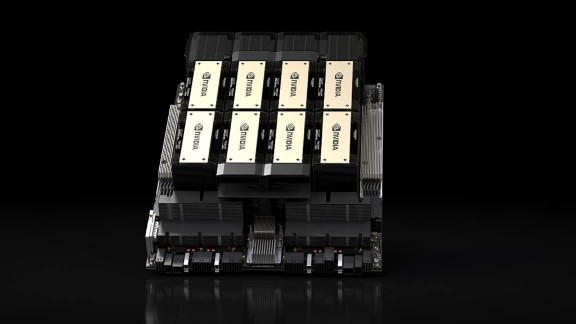
The demand side is not the constraint. Nvidia’s data centre business has become the metronome of the entire system. It reported $75.2 billion in data center revenue in a single quarter, up from $39.1 billion a year earlier, with 92% of total revenue now tied to AI infrastructure. In early 2023, that number was about $4 billion per quarter; by late 2025 it had reached $62 billion. Most of the chips used to train and run AI models come from NVIDIA. The queue is visible in its income statement.
That queue runs straight through SpaceX’s balance sheet. The company is spending billions building terrestrial data centers while marketing a parallel future of orbital compute that may not achieve commercial viability. The filing tells two stories about how capacity will be supplied and never explains how they fit together. The terrestrial story carries the contracts. The orbital one carries the valuation.
The scale of commitments exposes the fragility of delivery assumptions
The contracts, in turn, are already larger than the business that supports them. SpaceX’s compute deals with Anthropic and Google tower over last year’s revenue, a mismatch that only holds if delivery risk stays theoretical. The legal language suggests the counterparties do not share that assumption. They have priced in the possibility that the GPUs do not arrive.
Anthropic’s own behaviour points the same way. It trains and runs Claude on AWS Trainium, Google TPUs, and NVIDIA GPUs and is interested in developing multiple gigawatts of orbital AI compute capacity with SpaceX, while also pushing capacity into Asia and Europe. It is not committing to one supply chain; it is arbitraging several, in jurisdictions where the supply chain…will be secure. The Memphis contract is scale, not exclusivity.
That leaves SpaceX holding a set of obligations that depend on a single bottleneck it does not control. Nvidia sits at what one investor called the tollbooth; cloud providers, enterprise customers, and sovereign AI initiatives are all racing to build out compute capacity. Every additional contract SpaceX signs increases its exposure to the same queue.
The political layer is moving underneath that queue. U.S. President Donald Trump told reporters his team is exploring whether AI companies should give the public a stake, and officials have held preliminary discussions about the government buying shares in those firms. The companies did not respond. The contracts they have signed would be one of the few concrete assets a public stake could claim.
Those contracts assume a simple condition: that SpaceX can procure and install enough GPUs, fast enough, to meet fixed delivery dates. The clauses show what happens if it cannot. The counterparties can walk, or pay less, or both. The revenue that supports a $75 billion raise is the same revenue that disappears first if the chips are late.
The pressure lands where the promises are most precise. SpaceX has sold tens of billions of dollars of compute capacity that exists, on paper, in Memphis; Nvidia controls the chips that turn that paper into racks; and Google holds a contract that lets it leave if those racks are not full by September 30.
Cover photo Bruno Sanchez-Andrade Nuño CC-BY-2.0