OpenAI told investors it did not expect to be profitable until 2030. The same pitch cycle carried a second number: revenue will grow at a fast clip and exceed $280 billion in 2030. One horizon absorbs losses; the other assumes scale arrives intact.
The gap between ambition and market reality is no longer theoretical
That gap is no longer abstract. The market OpenAI created has filled in around it: the industry it launched has quickly become crowded, and investors are scrutinizing whether the AI sector’s meteoric rise can be sustained. Scrutiny tends to follow capital, and capital is now moving in sizes that change who gets to raise it.
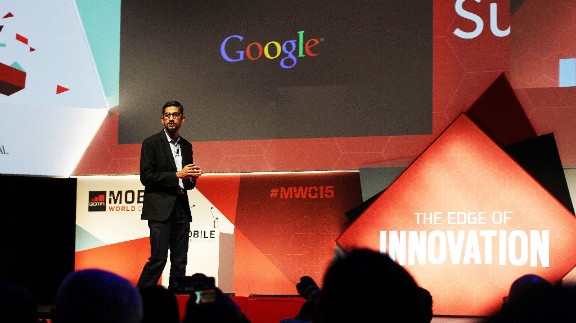
Alphabet has already moved. It said it would raise $80 billion while big tech companies compete to out-build each other with AI data centers. It had earlier laid out a broader plan: as much as $190 billion this year expanding its AI infrastructure, financed in part by almost $90 billion raised across bond markets since April 2025. The company framed the moment plainly, saying AI is “an expansionary moment” in its capital expenditure plans. The scale is not defensive. It is pre-emptive.
Public markets have shown they can absorb that scale, at least for now. Global IPOs have raised $87.5 billion through May 26, the strongest opening since 2021, as confidence strengthened into 2025 and activity accelerated in the second half. The pipeline reflects it: 2026 signals a potential AI-led mega wave. But that same capacity is finite in any given window.
Capital is abundant until the largest players claim it first
Bankers are already warning what happens when the largest issuers arrive first. Some say blockbuster offerings could soak up capital that would otherwise move elsewhere, even as those same offerings inject fresh momentum. Gil Luria put the constraint directly: “What OpenAI does not want is for the public market capital to exhaust itself.” He named the queue as well: SpaceX and Anthropic are ahead of it in line to IPO, while large public competitors could raise tens of billions each in secondary offerings, as Google just completed. The order matters because the capital is shared.
Anthropic is not waiting for public markets to prove demand. It has emerged as one of the biggest rivals, with soaring demand for its Claude AI from software developers and firms deploying its models to find vulnerabilities in code. The shift is measurable inside OpenAI’s own base: enterprise market share has dropped from 50% to 34% while Anthropic doubled its presence from 12% to 24%. The consumer side still shows scale — ChatGPT maintains its position as the market leader with 700 million weekly active users as of July 2025 — but the enterprise segment is where recurring revenue tends to harden.
OpenAI’s structure has been refitted to chase that revenue. It was founded as a nonprofit in 2015 before building a for-profit arm, a design that gave the nonprofit control over the business entity and later came under strain when Sam Altman was briefly ousted and employees revolted. In December 2024, OpenAI unveiled plans to create a public benefit corporation to raise far more capital while easing restrictions. The change was immediate and contested: the overhaul became controversial and Elon Musk sued, arguing the model had shifted toward private enrichment. A U.S. jury ruled against Musk, and the verdict removed a key overhang on the IPO. The legal path cleared just as the capital race accelerated.
The decisive constraint is sequence rather than structure or demand
The difficulty is that capital is not just required; it is being consumed faster by those already public. Alphabet’s spending and issuance are not isolated decisions but part of a pattern in which incumbents fund infrastructure at a scale private competitors must match to remain credible. The more those incumbents raise, the more they set the clearing price for participation. That price is rising while the supply of willing capital is being pre-allocated.
OpenAI’s projections assume it can cross that gap. The company is telling investors it can reach a revenue line that rivals the largest technology franchises, while accepting it will not produce profit until the same year. That pairing only holds if the capital required to get there remains available on terms that do not collapse the model.
The pressure point is no longer legal structure or user growth. It is sequence. Alphabet has already accessed public equity and debt at scale. Public competitors can return repeatedly to raise tens of billions. Anthropic is positioned ahead in the IPO line. Each transaction draws from the same pool that OpenAI will need to tap to finance a business that says it will still be loss-making when its revenue target arrives.
OpenAI does not control that pool. It is competing for it with companies that already have it. The risk is not that capital disappears; it is that it is spoken for first. The company built the market now deciding the order of access to it.