AI infrastructure spending is beginning to reshape the financial logic of the technology sector
Something enormous is happening beneath the surface of the economy, and the companies driving it are raising money as if software has turned back into heavy industry. Alphabet said it will raise US$80bn in equity to expand artificial intelligence infrastructure even though the full $80bn is less than 2% of Alphabet’s $4.6tn market cap. Half of the money, according to the company’s filing, will fund “scale AI infrastructure and global compute”. The other $40bn will cover “an administrative change” tied to tax obligations on employee equity awards. Even inside one of the richest companies in the world, the financing structure already reveals something awkward: AI infrastructure spending is becoming large enough that balance-sheet management now sits beside engineering as a strategic concern.
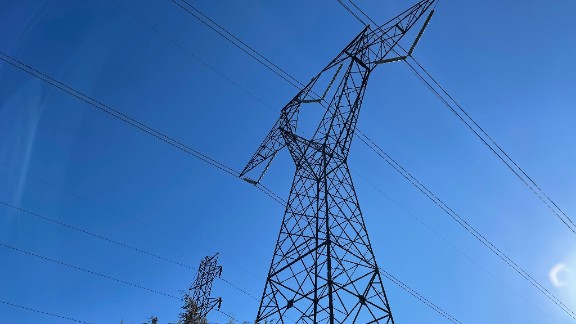
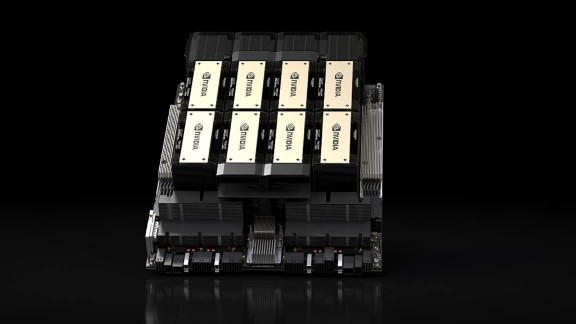
That shift matters because the visible AI economy — ChatGPT, Gemini, Claude, coding assistants and AI search tools — obscures the physical system underneath it. Data centres, chips, power lines, cooling systems, networking gear, transformers and grid capacity are no longer background infrastructure. That hidden machine is the real AI infrastructure boom. It is a capital-intensive industrial buildout, and it is dragging software companies into the financing logic of utilities, telecoms and industrial manufacturing. The old technology model depended on high margins and relatively light capital requirements. “Long gone are the days when the tech giants were capital-light free cash flow machines.”
Alphabet’s fundraising lands inside a market already flooding with AI capital. Alphabet, Amazon, Meta, Microsoft and Oracle are investing hundreds of billions of dollars apiece in data centres. Roughly 75% of their aggregate spend — approximately $450bn in 2026 alone — is directly tied to AI infrastructure, including GPU servers, networking equipment and power systems. The five hyperscalers plan to add approximately $2tn in AI-related assets to their balance sheets by 2030. That is not a software upgrade cycle. It is a restructuring of corporate finance around fixed assets whose economic life depends on demand remaining permanently ahead of supply.
Markets still value hyperscalers like software platforms even as their balance sheets fill with industrial assets
For now, the demand picture is holding. Demand for AI compute is running ahead of supply. Google Cloud growth has accelerated sharply. Backlog has surged. Most importantly for Alphabet, Search is proving far more resilient than many feared. Search revenue accelerated to 14.5% year-over-year growth, while market share remains stable globally even as competitors introduce AI-enhanced search products. YouTube advertising revenue grew 15%. Analysts argue that this advertising machine still throws off enough cash to support the spending cycle. Alphabet’s advertising-dependent revenue streams continue to generate substantial cash flow for reinvestment. The company is spending from strength. “Alphabet is certainly spending from a position of strength, not distress.”
But strength is not the same thing as flexibility. Alphabet previously said capital expenditure was expected to reach $180bn to $190bn this year, with another significant step up in 2027. Microsoft is moving in parallel. Microsoft is tracking toward $120bn or more focused on Azure and OpenAI infrastructure, while its capex has more than tripled since 2023. The financing question is no longer whether these companies can afford the buildout. It is whether markets continue treating infrastructure accumulation as equivalent to software scalability. A software company can slow hiring and preserve margins. A hyperscaler carrying trillions in long-duration AI assets cannot shrink a half-built data centre.
That is why the current market language around AI still sounds strangely incomplete. Investors discuss models, products and adoption curves. The spending itself behaves more like an industrial arms race. Matt Britzman called Alphabet’s fundraising “a clear sign that the AI arms race is moving into a more capital-hungry phase”. Even the optimists frame the story in terms that would once have belonged to railways or energy grids. AI is “probably going to enhance earnings”, helping explain why markets remain so high. Yet those same markets are financing a physical expansion programme of unusual scale before the economics of the infrastructure itself are fully tested.
The AI boom is pulling capital markets into a cycle driven by physical expansion and permanent utilisation
The infrastructure layer is already changing adjacent industries. Data centres have transformed from a niche real estate category into one of the most active M&A sectors in technology. Data centre deals hit a record $61bn in 2025. McKinsey estimates that $7tn in total data centre investment will be required by 2030. Jones Lang LaSalle projects North American data centre capacity will increase eightfold by 2030. The cloud market itself continues to expand — valued at $781.27bn in 2025 and projected to approach $2.9tn by 2034. Every layer of the stack now reinforces the next: cloud growth drives compute demand; compute demand drives data centre construction; data centre construction drives financing needs; financing needs pull capital markets deeper into the cycle.
The pressure point is not hidden in weak demand. It is hidden in the assumption that demand growth automatically justifies the structure being built to serve it. Alphabet’s own fundraising hints at the contradiction. The company remains enormously profitable. Britzman said Alphabet is at the “front of the race” in AI. Yet it is still tapping outside investors while some of its main AI rivals prepare to enter public markets. Anthropic has confidentially filed for an IPO after reaching a $965bn valuation and leapfrogging OpenAI to become the world’s most valuable startup. The market is simultaneously financing incumbent hyperscalers, financing the infrastructure underneath them, and preparing to absorb a new generation of AI listings whose valuations already presume that the buildout succeeds.
What has not yet been priced in is that the winners of the AI race increasingly resemble regulated infrastructure operators disguised as software companies. Their valuations still depend on the old assumption of scalable digital economics, even as their balance sheets fill with assets that require continuous financing, power access, physical expansion and permanent utilisation to justify themselves. The plan to add $2tn in AI-related assets to hyperscaler balance sheets by 2030 is not just an investment story. It is the point where the largest technology companies in the world quietly stopped behaving like software platforms and started behaving like industrial systems that cannot afford a pause.
Cover photo CC-BY Maurizio Pesce