Colombia’s runoff is becoming a referendum on whether the state can still impose order
Iván Cepeda trailing Abelardo de la Espriella by 43.7% to 41% after a campaign plagued by drone strikes, kidnappings, homicides and the assassination of a presidential candidate. The margin was narrow. The shift underneath it was not. The radical right is now being interpreted as having overtaken Colombia’s traditional conservative forces, a change visible in the collapse of senator Paloma Valencia, who spent months in second place in the polls before finishing with just 6.9% of the vote. Colombia’s runoff on 21 June is no longer a contest between left and right in the old sense. It is a struggle between two rival answers to a state losing its grip on violence.
The speed of Valencia’s fall mattered because of where her voters went. Political scientist Yan Basset said “what really helped De la Espriella was Valencia’s collapse”. Nadia Jimena Pérez Guevara described a “tactical shift” of rightwing voters toward De la Espriella, who appeared to be the safest rightwing candidate to reach the runoff. But Guevara’s more revealing observation was not ideological. She said De la Espriella “managed to consolidate the vote of the dissatisfied citizen”, including people “simply fed up with politics”. Exhaustion, not conversion, is driving the realignment.
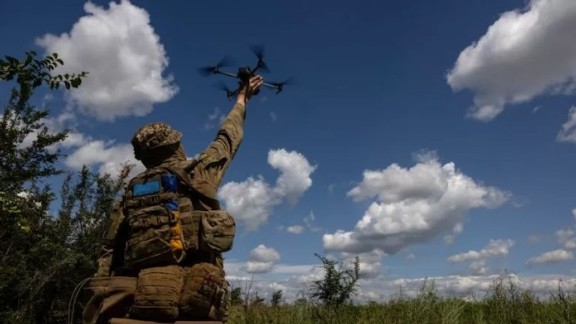
That exhaustion sits on top of a security crisis Colombia already knows too well. A resurgence of violence has become a defining issue in the election, with armed groups expanding across the country even after the 2016 peace agreement with most Farc forces. Clan del Golfo now has a presence in roughly 35% of municipalities; Farc dissident groups are present in 27%; the ELN in 21%. Armed groups could accelerate their territorial expansion, particularly as fragmentation produces new factions competing for territory along the Colombia-Venezuela border. The vacuum left after Farc demobilisation has heightened the risk of a wider border conflict. The map of armed control did not disappear with the peace process. It splintered.
The election is unfolding inside a geography where sovereignty is increasingly contested
The social cost is visible in one statistic. The UN secretary-general reported that 450 children were recruited and used by armed groups in Colombia in 2024 alone, four times the level recorded in 2020. The expansion of armed groups and the rise in child recruitment are not parallel developments. They coincide. Colombia’s election is taking place inside that overlap: a state still formally sovereign, but increasingly contested municipality by municipality.
De la Espriella and Cepeda are offering radically different responses to the same deterioration. The lawyer advocates military alliances with the US and Israel, total confrontation with criminal groups and the construction of mega-prisons. Cepeda supports Gustavo Petro’s “total peace” strategy of negotiating the dismantling of criminal organisations. Their confrontation has already hardened into mutual delegitimisation. Cepeda called his rival a “misogynist”, “homophobe” and “lawyer for paramilitaries and drug traffickers”. De la Espriella responded by calling Cepeda and Petro “a pair of delinquents” and “miserable criminals”. The insults matter less than what they reveal: neither side is speaking as though Colombia’s institutions can still absorb defeat without damage.
That is why Petro’s reaction after the vote landed so heavily. He refused to recognise preliminary results released by the National Civil Registry, alleging without evidence that the count included “800,000 additional people”. Guevara described the allegations as “not healthy” for Colombian democracy and warned that Cepeda’s decision to echo them “gives ammunition to those who want to equate De la Espriella and Cepeda”. Colombia has spent decades distinguishing between democratic competition and armed struggle. The danger now is not simply violence. It is the erosion of the line separating electoral defeat from institutional illegitimacy.
Both the security state and the peace process now look politically exhausted
The country has seen versions of this pressure before. Álvaro Uribe governed from 2002 to 2010 as Colombia emerged from what María Victoria Llorente described as a moment when “we were on the point of being a failed state”. Uribe’s security policies became, in the words of one account, “a permanent fixture in the country”. Yet even that period left behind contradictions: political scandals, patchy regional relations, and an understanding that military pressure alone could suppress violence without fully resolving it. The current runoff is taking place after the partial exhaustion of both the Uribe model and Petro’s alternative.
Petro’s own presidency carried the weight of Colombia’s violent political history from the beginning. He delivered his final 2022 campaign speech behind a wall of bulletproof shields, an extraordinary image that only made sense in a country where presidential candidates and reformist leaders had repeatedly been assassinated. His election as the first leftist president in decades was supposed to mark a break with that inheritance. Instead, Colombia enters another runoff with armed groups stronger, political rhetoric more openly hostile, and the legitimacy of the vote itself under dispute.
The uncomfortable fact beneath the campaign is that both candidates are arguing over how to govern a state whose territorial authority is already fragmenting faster than Bogotá’s politics can respond to it. Colombia’s institutions still hold elections, count ballots and stage televised debates. But active armed groups have expanded throughout Colombia’s municipalities over recent years, and the election’s central argument now turns on how much coercion the state must use merely to reassert control. The crack in Colombia’s political system is not ideological polarisation. It is that armed actors are expanding while faith in the institutions meant to contain them is weakening at the same time.