Violence and mistrust now shape the outbreak more than medicine alone
The WHO has declared the outbreak a global health emergency, even as officials in Congo continue to discover infections that had slipped through the surveillance net for weeks. In eastern Congo alone, authorities have recorded 1,028 suspected cases and more than 220 suspected deaths, while the virus has already crossed into neighbouring Uganda. The outbreak now stretches across Ituri, North Kivu and South Kivu, provinces where militias, border closures and collapsing trust travel faster than any medical convoy.
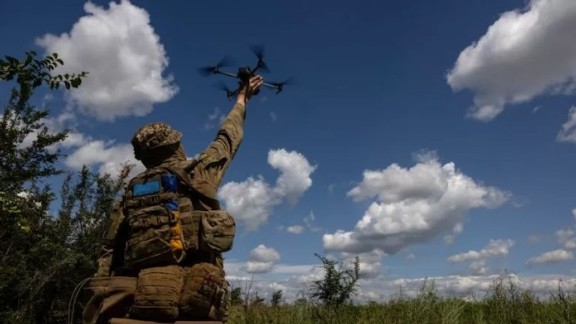
Doctors Without Borders described the epidemic as one of the fastest-spreading Ebola outbreaks ever recorded, a warning sharpened by the admission that nobody knows the true scale and severity of this outbreak. Health officials expanded testing, contact tracing and monitoring in an attempt to uncover infections that otherwise would have gone unrecorded, but the response machinery is moving through territory fractured by armed groups and political distrust. In Ituri, health teams have come under attack from the Allied Democratic Forces and local militias. In North Kivu and South Kivu, the Rwanda-backed M23 rebel group controls major cities, forcing disease control into areas where governments no longer command uninterrupted authority.
The geography of the outbreak has turned every checkpoint into an economic decision. Uganda and Rwanda have shut their borders with DRC, while Washington has barred most travellers who recently visited DRC, Uganda or South Sudan. The WHO publicly opposed the restrictions, and Tedros dismissed border closures as ineffective, arguing they discourage governments from reporting outbreaks openly. Yet political leaders facing domestic pressure gain more from appearing decisive than from preserving regional trade flows, especially after scenes of attacks on health centres driven by anger over burial rules that clash with local customs.
Financial exhaustion is becoming part of the contagion itself
That tension has exposed the financial exhaustion underneath the emergency response. The European Union has sent medical supplies to Ituri, and the United States has pledged more than $112m, but the Africa CDC says global funding for the response has more than halved, from $498m to $219m. The decline arrives while the outbreak accelerates geographically and epidemiologically. As of 29 May, 134 confirmed cases and 18 confirmed deaths had been reported across both countries, including nine confirmed cases and one death in Uganda. The financing gap no longer threatens only treatment capacity; it weakens surveillance systems that determine whether outbreaks remain local crises or become regional shocks.
The outbreak carries another disadvantage absent from previous Ebola emergencies. There are currently no approved vaccines or therapies specifically for the Bundibugyo virus disease. WHO advisory groups have begun assessing potential vaccines and therapeutics, while the agency said drugs and candidate vaccines should be evaluated in clinical trials. Regeneron confirmed that supply of maftivimab is already on the ground in the DRC, but experimental stockpiles do not substitute for established medical infrastructure. Every delay in proving efficacy extends the political life of border restrictions and deepens the commercial isolation surrounding eastern Congo.
The memory of West Africa hangs over every policy decision. The 2014–2016 outbreak produced more than 28,000 cases and forced governments and multilateral agencies to redesign outbreak response systems. WHO’s Research and Development Blueprint initiative was created in 2016 to accelerate testing, vaccines and treatments during epidemics, and those systems fast-tracked tools during the 2018–2020 DRC response. But the current outbreak has reopened the question that the post-2016 reforms were supposed to settle: whether emergency capacity can survive once donor attention fades.
Border closures now reflect a wider collapse in institutional confidence
The answer is already visible in the funding data and in the politics surrounding containment. A recent assessment argued that US aid cuts fueled the 2026 Ebola crisis by allowing surveillance systems, community engagement programs and frontline infrastructure to erode. That erosion now compounds itself. Communities resisting burial protocols attack clinics; governments respond with restrictions; restrictions weaken reporting incentives; weaker reporting obscures transmission chains. The outbreak recorded its first confirmed recovery this week, but recoveries do not restore trust once public health systems lose legitimacy on the ground.
The countries imposing the hardest border controls also absorb the economic costs of prolonged regional fragmentation. Rwanda and Uganda moved quickly to seal crossings with Congo, yet eastern Congo’s instability increases their own exposure to disrupted trade routes, informal migration and cross-border health surveillance burdens. The governments that present themselves domestically as barriers against contagion inherit responsibility for sustaining quarantined frontiers indefinitely. Meanwhile, WHO and regional health ministers from IGAD redirected about $7m toward prevention across East Africa, a figure that underscores how narrow the fiscal margin has become relative to the scale of the outbreak.
Congo has fought Ebola repeatedly; this is the country’s 17th outbreak. Tedros said he remained confident the country could again bring it under control, and national authorities continue deploying rapid response teams, surveillance systems and treatment centres. But the outbreak now sits at the intersection of militia violence, shrinking donor commitments, fractured regional borders and a virus strain without approved vaccines. In that environment, the most durable consequence is not only epidemiological. It is the normalization of a world in which emergency declarations arrive faster than the systems built to contain them.