Ceasefire language now functions less as restraint than as a way to sequence escalation
Many Lebanese did not wait for the bombs. They fled Beirut’s southern suburbs after Israel’s prime minister ordered attacks on the southern suburbs of Beirut, and before the first strike landed the logic of the moment was already visible: a ceasefire announced in April had not stopped the war, only changed the language around it. The US-brokered ceasefire failed to end the fighting. Benjamin Netanyahu said “terrorist targets” in Dahieh would be struck in response to attacks on Israeli civilians and violations of the agreement. The distinction between ceasefire and escalation had collapsed into sequencing.
Washington still speaks as if leverage exists. A senior Lebanese official said the government was relying on US mediation efforts to pressure Israel and prevent civilian casualties. Marco Rubio spoke to Netanyahu and Lebanese president Joseph Aoun and proposed a bargain familiar to anyone who has watched Lebanon for the past two decades: Lebanese officials should pressure Hezbollah to stop attacks on Israel, and Israel would refrain from escalation in Beirut. A US official said this would create space for gradual de-escalation. The problem is that the military facts on the ground are moving faster than the diplomatic premise underneath them.
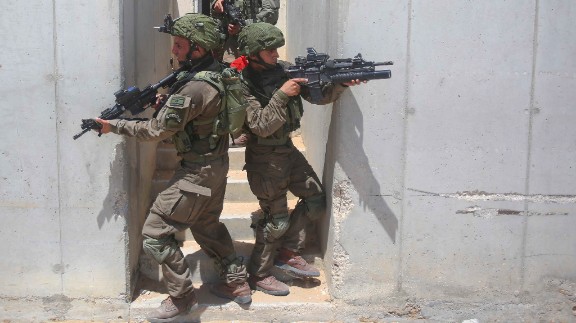
Israeli troops crossed the Litani river to seize Beaufort Castle, a strategically important ridge that has overlooked southern Lebanon for centuries. Israel Katz said the campaign was “not over” and that Israel was “determined to crush Hezbollah’s power”. Lebanese prime minister Nawaf Salam answered with the language of state collapse, accusing Israel of “scorched-earth policy and collective punishment”. Those statements are not symmetrical. One side is describing an unfinished military campaign. The other is describing what prolonged campaigns do to societies that no longer have reserves left to absorb them.
Financial collapse left Lebanon without the reserves that wars usually consume slowly
Lebanon entered this war already financially broken. Lebanon’s 2019 financial collapse ranks among the worst globally in recent history. The collapse of the Lebanese pound’s dollar peg triggered widespread socioeconomic devastation, after decades of speculative financialisation over social welfare. More than 70 per cent of the population was living in multidimensional poverty before the latest escalation hardened into regional conflict. The banking sector was already insolvent. The Lebanese pound had already lost 98 per cent of its value. Lebanon was not a functioning economy interrupted by war. It was an exhausted financial system asked to survive another shock.
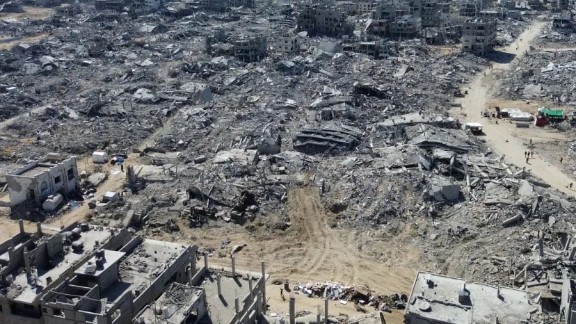
The war has moved directly through that weakness. The World Bank estimated the economic cost of the 2023-24 conflict at $14bn, with reconstruction and recovery needs estimated at $11bn. Another report found the 2026 Lebanon-Israel war affected Lebanese businesses far beyond the districts that suffered direct destruction or evacuation. Even firms outside Dahieh and south of the Litani absorbed the shock. In April, Lebanon’s inflation rate rose to 20 per cent. Every new displacement wave now moves through a country where savings were already erased and where private business carries an economy the state can no longer stabilise.
That matters because Lebanon’s economic structure leaves almost no shock absorbers. The private sector contributes around 75 per cent of aggregate demand. The country built itself around openness, capital mobility and a banking sector equivalent to more than 2.5 times its economic sector. That model depended on confidence long after solvency disappeared. The current war is testing something more dangerous than military deterrence: whether a state hollowed out by financial collapse can continue to outsource social survival to households, remittances and private enterprise while territory inside it becomes an active battlefield.
Diplomacy increasingly follows escalation rather than preventing it
The pressure is now visible in the diplomatic language itself. UN experts condemned Israel’s bombing campaign against Lebanon on 8 April only hours after a ceasefire agreement was brokered by Pakistan between the United States and Iran. They said they were witnessing “continuing utmost contempt for the international legal order”. More revealing was the chronology. The experts said Israel chose the very moment a ceasefire was announced to unleash the largest coordinated wave of strikes on Lebanon since 1980. Mediation is no longer preceding escalation. It is occurring alongside it, almost in parallel, as if diplomacy’s role has narrowed from prevention to managing the tempo of expansion.
That is why comparisons to 2006 no longer reassure the people making them. The current cycle of violence has already prompted comparisons to the last Israel-Hezbollah war, but even those involved in that period now describe the analogy as insufficient. The 2006 example is described as “grossly inadequate to describe the current peril”. Both Israel and Hezbollah spent years studying the lessons of that war on the assumption another conflict was inevitable. The assumption underneath deterrence was that preparation would contain escalation. Instead, preparation appears to have normalised it.
The uncomfortable fact running underneath every negotiation is that Lebanon’s institutions are being asked to mediate a conflict while lacking the financial capacity to absorb its consequences. The government is relying on Washington to restrain Israel even as Israel says the campaign is unfinished. Lebanese officials are being asked to pressure Hezbollah while businesses absorb another war on top of a currency collapse that already destroyed savings and wages. The private sector remains the country’s main pillar of demand, but the structure underneath it was overloaded before Israeli troops crossed the Litani. What has not yet been fully priced in is that a state whose banking system is insolvent, whose currency lost 98 per cent of its value and whose social protection systems were already overwhelmed is now being treated by every actor in the conflict as if it still possesses strategic depth it no longer has.