Territorial control increasingly replaces ceasefire implementation as the governing logic of the war
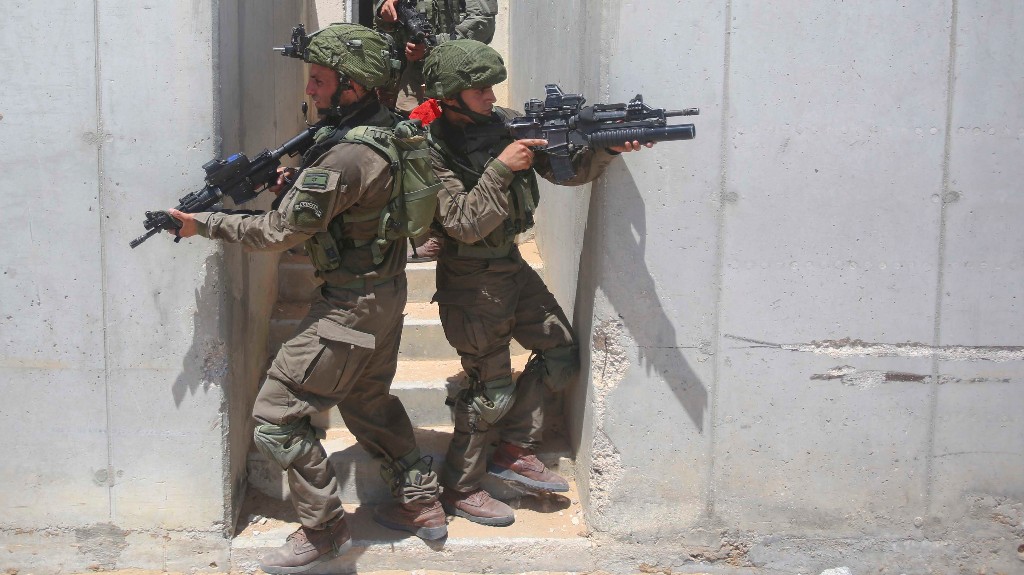
Israeli Prime Minister Benjamin Netanyahu said he had directed the Israel Defense Forces to increase control of Gaza to 70% while speaking at a conference in the occupied West Bank, extending a military footprint that contradicts the terms of the Donald Trump-led ceasefire agreed in October 2025. “We now control 60% of the territory of the Strip,” Netanyahu said after noting that Israeli forces had moved from 50% to 60% control under the ceasefire arrangement. The pause in fighting was supposed to produce a sequence in which Hamas would disarm and Israeli troops would withdraw. Instead, the indirect talks have stalled while the territory under Israeli control continues to expand.
The territorial changes are no longer measured only in battlefield gains but in roads, outposts and corridors that redraw how Gaza functions. The Wall Street Journal reported that Israeli control expanded from 53% to 59% after the ceasefire and that at least seven new outposts had been established. The Israeli military has also taken control of the Salah al-Din road, the north-south artery running through Gaza. As Israeli forces deepen their hold, the army continues uncovering underground Hamas tunnels and demolishing buildings in Gaza. Each additional kilometer of controlled territory hardens the political cost of returning to the demarcation lines envisioned in October.
That shift has unfolded while the ceasefire formally remains in effect. Israel continues strikes on Gaza despite the agreement, and at least 738 Palestinians have been killed since the ceasefire came into effect, according to the Hamas-run health ministry, whose figures the UN considers reliable. The contradiction has become increasingly explicit in official language. Israeli Defence Minister Israel Katz said the country had pledged to eliminate everyone who led the October 7 massacre and added that Hamas would not rule Gaza civilly or militarily. The ceasefire framework now operates less as a path toward withdrawal than as a perimeter around a continuing campaign.
Military expansion is increasingly tied to demographic and administrative ambitions
Inside Israel’s governing coalition, the language surrounding Gaza has also moved beyond military objectives toward demographic ones. Katz said a “plan for voluntary emigration from Gaza” would be implemented, echoing positions previously defended by Itamar Ben Gvir and Bezalel Smotrich, who publicly supported what they described as the “voluntary migration” of Palestinians from Gaza and resettling the territory with Jews. The proposal carries legal and diplomatic weight because forced displacement of civilians could amount to a war crime. Territorial control therefore no longer concerns only security corridors or buffer zones; it increasingly shapes who is expected to remain inside Gaza at all.
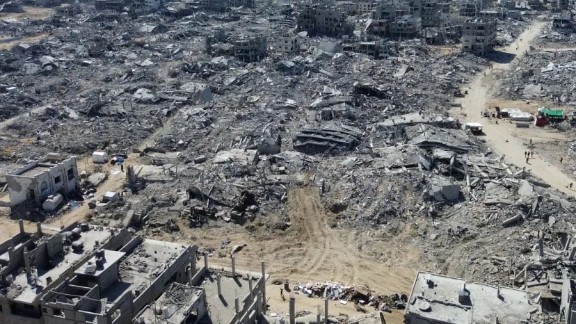
The war’s arithmetic keeps overwhelming every diplomatic formula attached to it. About 1,200 people were killed in the Hamas-led attack in 2023, and 251 hostages were taken, triggering the campaign that reduced much of Gaza to ruins and displaced many of its 2.1 million residents. As of 12 May 2026, 72,742 Palestinians had been killed and 172,565 injured, according to figures the UN considers reliable. At least 21,283 of the dead were children. The early months of the conflict alone recorded more than 30,000 deaths within five months, after which fatalities continued at an average pace of roughly 1,600 per month.
The physical destruction has steadily eroded the systems needed to measure it. Attacks on hospitals, medical shortages and electricity outages have severely impeded the medical response. Operations are conducted without anesthesia and antibiotics, while Gaza now has the highest number of child amputees per capita in the world. Humanitarian organizations and the United Nations believe the reported death toll significantly undercounts the number of dead, with thousands still unaccounted for. A territory governed through expanding military zones and collapsing civilian infrastructure becomes harder not only to rebuild, but to document.
Attritional warfare is reshaping the political language of permanence and responsibility
The Israeli military campaign has simultaneously become more targeted and more expansive. Mohammed Odeh, the newly chosen head of Hamas’s military wing, was killed along with his wife and two sons in an Israeli strike. A strike in Khan Younis killed Ihab Khrizim, described as the head of a Hamas funds transfer network, and Mohammed al-Habash, a Hamas unit commander linked to weapons manufacturing. Another strike in Gaza City appeared to target Hamas battalion commander Imad Asleem, who was killed alongside his teenage daughter Israa. Tactical operations aimed at degrading Hamas leadership increasingly occur inside a landscape where civilian deaths have become routine enough to absorb individual incidents into a larger attritional pattern.
That pattern has begun reshaping the political language around permanence. Netanyahu told a gathering of Israeli army widows and orphans in Jerusalem that Israel’s dead formed a “chain of heroes”, speaking to children whose fathers had been killed in combat. Among them were some of the 890 new orphans Israel has registered since October 7, 2023. “It is not in vain,” Netanyahu repeated. The statement carried particular force because it linked mounting casualties to endurance rather than resolution.
Yet the actors who pushed hardest for maximal territorial control also inherit the burden of governing the aftermath. The larger the zone under Israeli military administration becomes, the less plausible rapid disengagement appears and the more responsibility shifts onto the state institutions controlling the territory. A strategy built on permanent pressure against Hamas collides with the fact that Palestinians across Gaza remain unsafe six months after the ceasefire announcement, while the UN Human Rights Chief described an “unrelenting pattern of killings” reflecting continuing disregard for Palestinian lives. The political factions that treated expanded control as leverage increasingly own the consequences of sustaining it.
The ceasefire that once implied a transition out of war now marks the point from which the war’s territorial logic accelerated. Each new percentage point of land controlled by the Israeli military widens the distance between a negotiated withdrawal and the reality on the ground. Gaza’s map has become less a temporary battlefield than a record of which commitments survived contact with power and which ones did not.