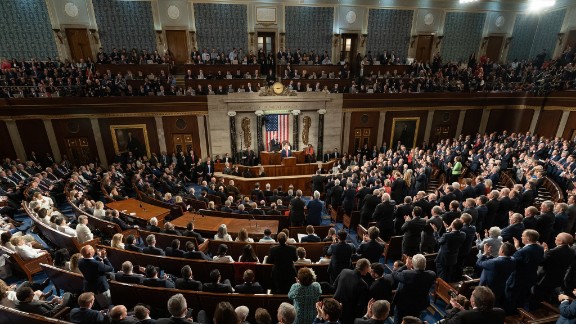
Senate Republicans forced through a bill that carries a $70 billion immigration enforcement package after they overcame deep internal divisions that had stalled it for weeks. The victory delivered what allies framed as momentum for President Donald Trump. It also locked in a spending direction that had already begun to accelerate before the vote.
The bill converts an existing trajectory into law and scale
Over the past nine months, Immigration and Customs Enforcement spending on detention has spiked alongside a policy shift that prioritizes detention over targeted enforcement. The bill does not redirect that trajectory. It scales it. The law expands immigrant detention and provides funding for federal, state, and local authorities to detain adults and children, embedding a system that had been growing into statute.
The scale sits in a single line item. The bill provides $45 billion for detention of single adults and families. That funding authorizes a broader operational model: a new form of family detention in which parents can be detained with their children while they are prosecuted for unauthorized entry. The policy converts what had been a logistical constraint—how to handle families—into a funded capability.
Detention shifts from constraint to default operating mode
The consequences extend beyond capacity. Under the same framework, border patrol agents can physically examine children as young as 12, while entire families, including infants, can be held for the duration of their cases. Detention is no longer a bottleneck in the system. It becomes the system’s default setting, with time itself absorbed into the cost structure.
That cost structure is already concentrated. In 2025, a small group of private prison operators, charter airlines and security contractors dominated ICE’s largest contracts. Two companies alone—the GEO Group received $2.1 billion and CoreCivic received $653.5 million—accounted for a substantial share of total obligations. Charter aviation firms followed, with CSI Aviation at $1.1 billion and Classic Air Charter at $800.2 million securing the movement layer of the system.
Political alignment removes internal barriers to expansion
Those contracts sit downstream of political decisions. Since returning to office, President Donald Trump has ramped up immigration detention, with private contractors operating much of the required infrastructure and reaping hundreds of millions of dollars after contributing to his political operations. The supply chain for detention—beds, transport, security—has already been built around a small number of vendors. The bill does not diversify it. It feeds it.
What changed in the Senate was not the structure but the resistance to it. The same caucus that split over the bill ultimately aligned to pass it, converting internal dissent into legislative approval. That shift matters because it removes the last internal constraint on expansion. The bill now heads to the House for final passage, where opposition will be external, not within the majority that initiated it.
Time becomes the system’s binding constraint rather than capacity
The alignment between policy and contracting is not incidental. The expansion of detention requires capacity that the federal government does not fully own. It relies on private operators whose revenues scale with occupancy and duration. A system designed around detention as a priority does not just increase volume. It stabilizes demand for the companies already positioned to meet it.
That stability rests on a quiet assumption: that detention can expand without friction in time or cost. Yet the same facts that justify the expansion—families held for the length of their cases, children processed within the system—tie capacity directly to the duration of proceedings. The longer cases take, the more beds are required; the more beds are funded, the longer the system can sustain holding people in them. Demand and duration reinforce each other.
For the companies at the center of the contracts, that loop is already visible in the numbers. The GEO Group’s $2.1 billion and CoreCivic’s $653.5 million in obligations were booked before the additional $45 billion in detention funding becomes available. Their current position assumes that scaling capacity will translate cleanly into revenue. The bill ensures the funding. It does not shorten the time people remain inside the system that funding creates.
The pressure, then, does not sit in whether detention expands. It sits in what happens when a system funded to hold more people also holds them longer than the infrastructure was designed to process. The Senate has removed the political barrier to expansion. It has not removed the structural dependence on time.
The result is already embedded in the balance sheets of the companies that dominate ICE contracts: a detention system that pays them more the longer it takes to move people through it, financed by a law that assumes that duration is a variable it can afford to ignore.