Nearly eleven thousand people still cast ballots for a candidate who had died weeks before the vote. The ballots were counted anyway, folded into an election where the paper itself—crowded with 36 presidential candidates—had already stretched beyond legibility. What registered as participation was, in places, something closer to inertia.
The count held but belief in it thinned before the result arrived
The official result took time to catch up. It arrived on May 17, just three weeks ahead of the June 7 second round, after more than a month of waiting for confirmation of the top two candidates. By then, the count had already done its damage. Fraud allegations surfaced during the prolonged tally, though European Union observers said they found no concrete evidence, echoing earlier findings that election monitors found no evidence of malfeasance. The system held. The belief in it did not.
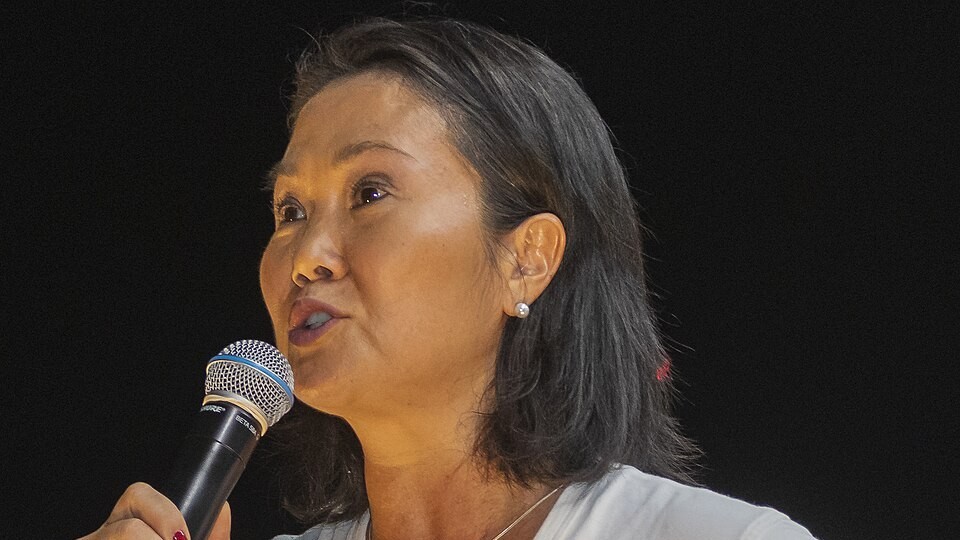
The numbers that emerged from that count describe a political field that never cohered. Keiko Fujimori came first with just 17%. Behind her, Roberto Sánchez netted 12 percent of the vote, with Rafael López Aliaga at 11.9 percent. The gap between second and third—roughly 21,200 votes—was smaller than the administrative delay that followed. Twenty-eight candidates finished below 4%, and 23 failed to reach even a single-digit share. Fragmentation was not a byproduct of the contest. It was the contest.
An electorate large enough to decide chose instead to withdraw
The abstentions and rejections were larger still. 7.16 million eligible voters did not cast a ballot, leaving only 20 million participants. Of those who did, more than 11.7 percent cast a blank ballot and another 5 percent spoiled theirs. Taken together, those votes would have formed the largest bloc in the race—more than three million supporters, had they been counted as a political force. The election produced a winner. It did not produce consent.
That gap sits beneath Fujimori’s lead. She has been a favourite in the presidential race for years, advancing repeatedly to final rounds and now leading again by a margin that mirrors the 800,000-vote gap that once separated her from Pedro Castillo in reverse. Her campaign offers order—a promise to “defeat terrorism” and “stabilise the economy”—and, if elected, a 60-day state of emergency. The message is consistent with a political identity shaped early, when her father named her first lady at 19, and sustained through her defence of his government despite allegations of human rights abuses, including forced sterilisation and extrajudicial killings. What has shifted is not her platform, but the electorate’s capacity to organise against it. Anti-Fujimorismo is waning.
Two candidates remain but the missing voters still define the race
Sánchez arrives from a different fracture. A psychologist by training who served in Congress for Lima and briefly in the cabinet of Pedro Castillo, his tenure ended when Castillo attempted to dissolve Congress and was impeached and arrested. On the campaign trail, Sánchez has adopted the symbols of that rupture—the wide-brimmed “Chota” hat—to signal allegiance with Indigenous and rural voters who feel ignored by Lima’s elites. His base includes informal and illegal miners and coca growers, groups that operate largely outside the state the election is meant to legitimise.
The runoff reduces this landscape to two names because the system requires it. Only the top two contenders proceed, even when neither commands more than a fraction of the electorate. The structure is intact: the president is elected by absolute majority in a two-round system. The premise is that the second round consolidates preference. What the first round revealed is that preference may not consolidate at all.
The uncounted, the blank, and the spoiled sit between Fujimori and Sánchez as an electorate that has already voted against the choice it is now being asked to make. They have the power to shift the outcome of the second round, but only should they choose to do so. Nothing in the first round suggests they will.
What remains is a result that will be numerically decisive and politically partial. Fujimori’s 17 percent lead, Sánchez’s rural coalition, the formal mechanics of a runoff—each rests on the same unstated assumption: that the voters who withheld or nullified their ballots will re-enter the system when presented with fewer options. The count already shows they did not engage when offered thirty-six. It does not show why they would engage when offered two.
Cover photo CarlosEduardoPA CC-BY-SA 4.0