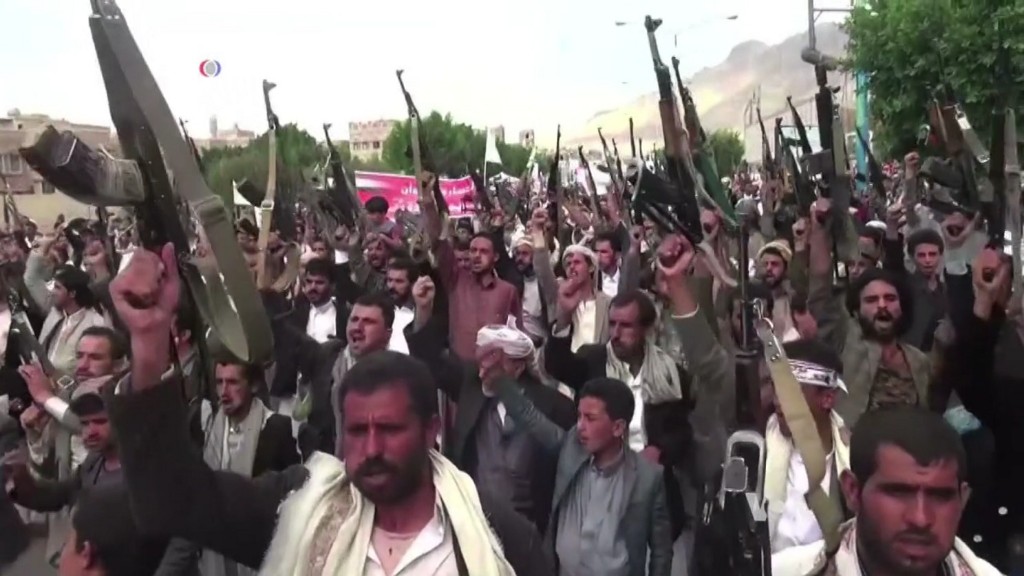
The first missiles were aimed at Jaffa, but the more consequential target was invisible: the Houthi leadership fired missiles towards Jaffa Israel and said Israeli linked commercial shipping would be blocked entering the Red Sea. Within the same statement, the group made the operational shift explicit — “We declare a complete and absolute ban on maritime navigation for the Israeli enemy in the Red Sea” — and then removed any ambiguity about enforcement: “any enemy movement… will be a military target”.
Shipping companies did not wait to see whether the threat would be carried out. They had already been acting as if it would.
Economics flips before the first impact is tested
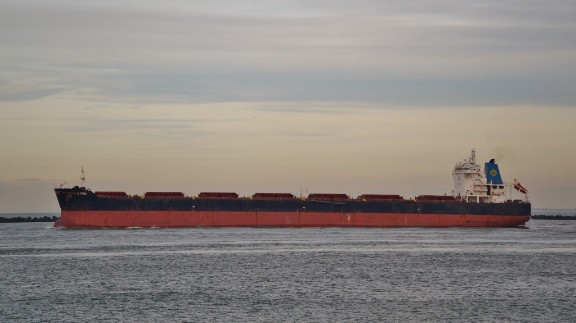
By the time the declaration arrived, the economics of the route had inverted. For a single transit, war risk premiums… run $1.2–1.8 million, and the total insurance cost can exceed the economic benefit of the shorter Suez route. The calculation is no longer about distance or fuel. It is about whether a voyage can be insured at all without erasing its margin. That shift has forced operators into decisions that look operational but are financial: many companies are now sending vessels around the Cape of Good Hope instead, a detour that adds at least 10 days of travel.
Those extra days are not neutral. They compound into a second-order cost that was not designed for conflict: OceanScore analysis shows near-tripling of EU ETS costs due to Red Sea crisis, driven by a significant increase in distance travelled. The longer route burns more fuel, and the emissions bill rises with it. A security decision becomes a carbon liability, and the cost sits on balance sheets that cannot opt out of either.
Risk is priced before events, not after them
Insurers have already moved ahead of the ships. At Lloyd’s, the Joint War Committee began pricing not actual attacks but the probability of future ones. In practice, premiums are set ahead of events, risk zones expand pre-emptively, and decisions are driven by geopolitical signals, not incident reports. The sequence has flipped. Insurers are no longer waiting for events; they price the probability of events.
That inversion matters because the attacks have not stopped long enough to test it. The US said there had been 27 attacks in the Red Sea since mid-November, part of a broader pattern in which there have been over 100 confirmed attacks or attempted attacks on commercial vessels. The methods have evolved — from simple drone attacks to include anti-ship ballistic missiles and coordinated multi-vector attacks — and so has the target set: attacks have expanded to include ships with no apparent link to the Israel-Gaza conflict. The result is structural, not episodic: this indiscriminate targeting increases the risk for all commercial traffic.
Military response has not restored the old calculus. The US said it carried out six strikes in self-defence against Houthi targets, yet the pace has not diminished despite US and UK military strikes. The feedback loop is visible in shipping data: at least four oil tankers changed course since the overnight strikes. Each strike meant to secure the route becomes another signal insurers and operators use to price it as insecure.
Geography turns leverage into a permanent pricing signal
The Houthis themselves had resisted entering this phase. The Houthis… had been reluctant to join the US-Iran conflict, preferring negotiations with Saudi Arabia. The shift came with coordination. “We will respond to escalation with escalation”, the leadership said, adding that military operations will be increasingly coordinated… with the axis of jihad and resistance. Iranian officials had already pointed to the mechanism: the revival of the blockade of Bab al-Mandab strait… was being considered.
The geography is narrow enough to make that credible. The Bab al-Mandab is a 20-mile wide channel linking a route that serves as the main artery for trade… estimated at about $700 billion a year. It is also a chokepoint that can be paired. As Aliakbar Velayati put it, “the resistance rings have the power to close both waterways” — Bab al-Mandab and Hormuz — a combination that has the capacity to sabotage the flow of East-West commercial naval traffic. The statement is less a threat than a description of leverage already embedded in the map.
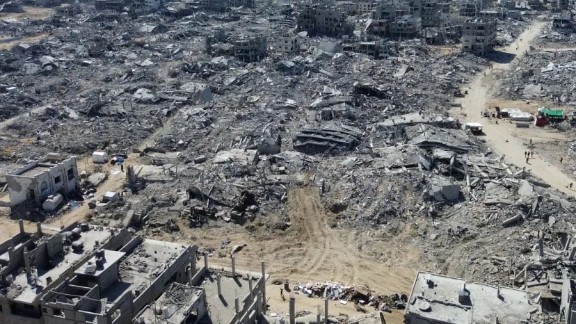
Israel’s strikes have reached into that system. Israeli strikes hit the Karun Petrochemical Company, prompting Tehran to acknowledge the damage while insisting the attacks did not result in any casualties and that the extent of damage… is under investigation. Diplomacy followed immediately: Abbas Araghchi spoke with the UK, Turkish and Saudi foreign ministers. The military and diplomatic tracks now move in parallel, each producing signals the market reads before the next move is made.
Those signals are already moving prices. A statement brought oil prices back down to $90 a barrel, a reminder that words can reset markets as quickly as missiles. Inside Washington, the sensitivity is explicit: the president is extremely sensitive to changing stock and oil prices, and the administration might be reconsidering its plans with regard to Iran over concerns about fluctuating oil prices. Economic pressure feeds back into military posture, which feeds back into the pricing models that now govern whether ships move.
The result is a system in which no single actor controls the outcome, but every actor is already priced as if the worst case is plausible. The Houthis do not need to sink ships to change routes — no ships need to sink for that. Insurers do not need losses to raise premiums. Governments do not need escalation to adjust policy; they need only the price signal of escalation.
The assumption holding the system together is that the disruption remains containable to a corridor that can be bypassed. That assumption is already contradicted by the way the market is behaving. If risk is priced in advance, and if that pricing forces ships onto longer routes that trigger higher emissions costs and insurance premiums that erase the Suez advantage, then the Red Sea is no longer a route that occasionally becomes dangerous. It is a route that is structurally uneconomic to use under uncertainty.
And that makes the final pressure point visible: not in the missiles over Jaffa or the statements from Sana’a, but in the balance sheets of shipping companies that must choose between a route where insurance can exceed the economic benefit and a detour that locks in higher fuel, time, and carbon costs — a choice that turns a temporary security threat into a permanent repricing of how $700bn of trade moves, whether or not another missile is fired.