Air raid sirens rang out on Saturday in Bahrain as residents were told to move and wait. Hours earlier, Iran fired ballistic missiles and drones at Bahrain and Kuwait, a response that followed the US shooting down four Iranian drones and striking coastal radar sites.
Kuwait’s military said it was intercepting drones and missiles, while US Central Command counted seven ballistic missiles fired toward Kuwait and Bahrain. Six never landed. One never arrived. The exchange did not end there; it widened.
What began as retaliation now moves without a clear origin or endpoint
Iran’s Revolutionary Guards said they had targeted “enemy bases” in the Gulf after US strikes on Sirik and Qeshm Island, and identified the Ali al-Salem airbase—where the US navy’s 5th fleet is located—as a target. Each side described its actions as response. The sequence has no origin point anymore, only momentum.
That momentum now runs through the narrowest part of the global energy system. The US military is enforcing a blockade on Iranian ports; Tehran has answered by refusing to reopen the Strait of Hormuz and warning it will continue to block transit as long as the US blockade remains. Roughly one-fifth of the world’s oil passes through Hormuz. The corridor is no longer a passage. It is a condition.
The conflict shifts from military exchange to systemic economic disruption
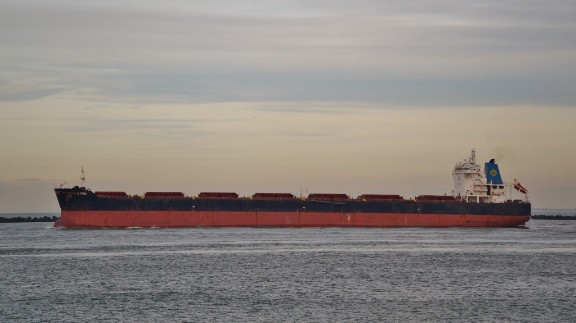
The immediate effect is visible at sea. Around 800 vessels are stuck in the Strait of Hormuz. They can move, but ships can technically move without insurance — they just can’t go anywhere. Ports will not take them: “They will not be accepted at any port,” Rahul Kapoor said. The blockade is not just a line on a map; it is a market that has stopped clearing.
Energy prices have already reacted. The blockade and Iran’s chokehold on the strait have sent energy prices spiking, and the disruption has begun to rewire flows that took decades to stabilise. Analysts say Asia’s liquefied natural gas prices have jumped, opening arbitrage that allows traders to ship cargoes from the Atlantic to the east to replace lost Qatari supply. The redirection is not a detour. It is a repricing of distance.
That repricing is already altering demand. Supply disruptions have forced Asia to reduce LNG imports, with purchases falling to 20.4 million tonnes in March 2026 from 22.1 million tonnes in 2025. Governments are responding in ways that are harder to reverse: reverting to coal, expanding nuclear capacity, or fast-tracking renewables. Some are canceling LNG projects. The shift is not ideological. It is logistical.
Economic shock spreads beyond energy into food and human survival
The consequence lands unevenly. Asian buyers take more than 80% of Qatar’s LNG exports, making the region both the most exposed to disruption and the fastest to adapt away from it. The same conflict that has curtailed Middle Eastern shipments is also undermining LNG’s position as a “transition fuel”. What was marketed as a bridge now looks like a dependency that fails under pressure.
The damage is not contained within energy markets. The World Food Programme says millions of people are being pushed into hunger as energy and food prices rise, with 2.5 million in Somalia, 2.3 million in Afghanistan and 1.3 million in Sri Lanka already struggling to meet basic needs. It warns 45 million people could be pushed into food insecurity by June, and that the effects will intensify even if the conflict ends. The system is transmitting shocks faster than it can absorb them.
Yet the military logic driving the escalation is indifferent to those second-order effects. US strikes are framed as defensive—to counter drones that “posed an immediate threat to regional maritime traffic”—while Tehran conditions any reopening of Hormuz on the removal of the blockade. Both positions are internally coherent. Together, they are mutually exclusive.
A chokepoint without alternatives becomes a negotiation without progress
That contradiction now sits inside the price of energy, the availability of shipping insurance, and the balance sheets of countries that depend on both. International energy markets depend on reliable transport routes, and the blockage of a chokepoint can lead to substantial supply delays and higher shipping costs. Hormuz is not a route that can be replaced; some chokepoints have no practical alternatives. The system has no bypass.
The assumption still embedded in markets is that the corridor will reopen because it always has. But Tehran has tied transit explicitly to the removal of the blockade, and Washington has said the blockade “will remain in full force” until Tehran reaches a deal. Each side has made access conditional on the other’s concession. The passage through Hormuz now depends on a negotiation that is not happening.
The vessels waiting in the strait are not a backlog. They are the visible inventory of a system that no longer clears, held between a blockade that will not lift and a passage that will not open.