In April, OPEC’s own data showed production collapsing to 33.19 million barrels per day from 42.77 million in February. The quotas had been rising at the same time.
The group is now preparing to extend that contradiction. Seven core members are likely to increase targets by about 188,000 barrels per day from July, the fourth increase in as many months. The sequence reads as policy continuity. It is not. It is a repetition that only holds if targets still describe reality.
Targets continue to rise even as the system they describe breaks down
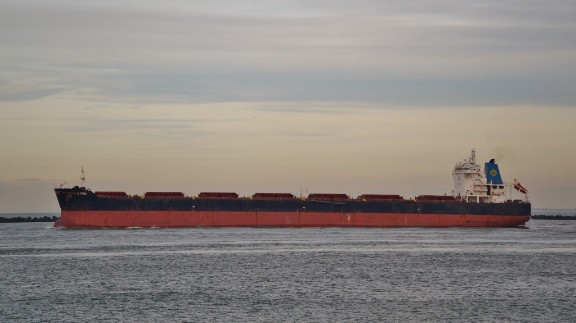
They do not. Actual output remains constrained, and most members cannot meet their targets. The constraint is not internal discipline but physics: the war has cut oil flows via the Strait of Hormuz, leaving producers unable to move barrels they are formally allowed to pump. The cartel is raising ceilings inside a room whose doors are shut.
That closure has already rewritten the market. Global oil supply crashed by 10.1 million barrels per day in March, the steepest disruption on record, triggered by conflict-related disruption in the Strait of Hormuz. Prices responded with equal force: Brent rose about 65 per cent, or $46 a barrel, by the end of March. The signal was immediate and unambiguous. The system had lost volume it could not quickly replace.
Market signals adjust rapidly while policy responses stall
What followed was not adjustment but hesitation. Prices eased somewhat after a temporary ceasefire, yet uncertainty persisted amid a blockade of vessels entering or leaving Iranian ports. Negotiations between Tehran and Washington began to matter less for their outcome than for their duration. As long as the blockade held, supply stayed impaired; as long as talks continued, markets could not settle on a new equilibrium.
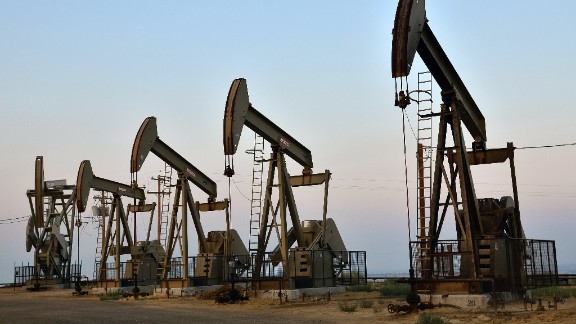
Inside OPEC+, the dislocation became structural. Seven core members had already increased quotas by almost 600,000 barrels per day between April and June. At the same time, OPEC+ production fell by 9.4 million barrels per day month-on-month. The gap between permission and capacity widened into something more consequential than non-compliance. It became the operating condition.
The gap between quotas and reality becomes the system itself
The cartel’s cohesion weakened as that gap opened. The United Arab Emirates left the organization after almost 60 years, a departure that deepened the crisis. The exit removed a producer that had both capacity and an incentive to use it. It also stripped the quota system of one of the few members able to test whether targets still meant anything.
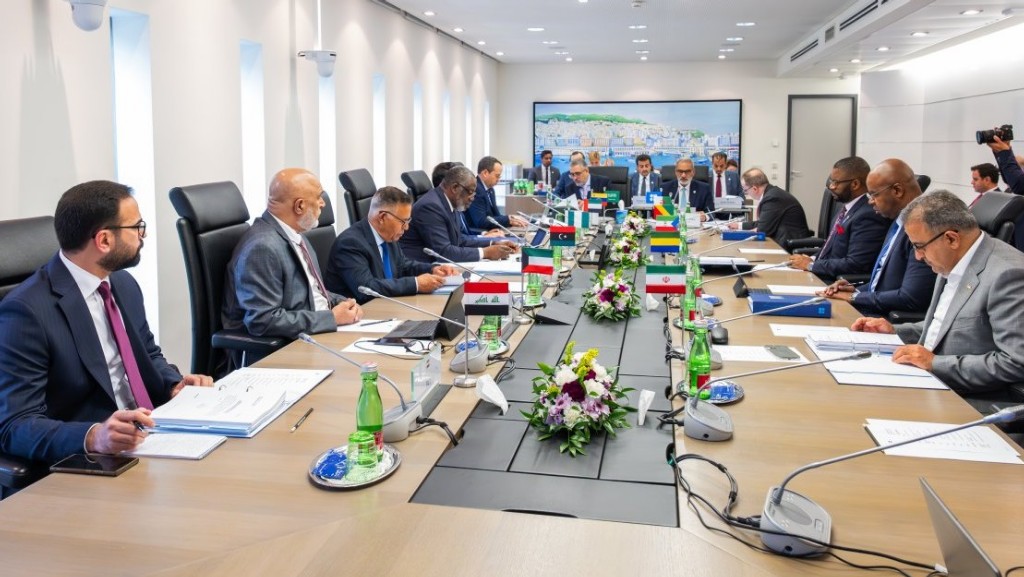
The remaining core — Saudi Arabia, Iraq, Kuwait, Algeria, Kazakhstan, Russia and Oman — continues to meet and to set numbers. But the numbers no longer bind behavior. The quota increases are mostly symbolic, because actual oil production has dropped sharply since late February. Symbolism, in this context, is not neutral. It preserves the appearance of control in a system defined by its loss.
Symbolism replaces control as demand adjusts independently
The loss is visible in the flow data and in demand. The Iran war has upended the global outlook, and demand destruction is expected to spread as scarcity and higher prices persist. The market is not waiting for supply to recover; it is adjusting consumption downward. That adjustment does not repair the system OPEC+ manages. It bypasses it.
Yet the group’s formal machinery continues unchanged. A full ministerial meeting is scheduled, but is not expected to make policy changes. The decision not to change policy is itself a choice: it assumes that the framework still governs outcomes. It assumes that when flows resume, the quotas will again map onto barrels.
The organisation maintains its language even as the market stops listening
That assumption is carrying more weight than the structure beneath it can bear. The war has already shown that quotas cannot move oil through a blocked strait. The exit of the United Arab Emirates has shown that membership cannot guarantee alignment when the system stops delivering. The repeated increases — April, May, June, and now July — show that the organization is committed to preserving a signal even as the underlying variable disappears.
OPEC+ is not misreading the market. It is choosing to speak in a language the market has stopped hearing. The quotas still rise. The barrels do not. And in the gap between those two facts sits the only number that matters: the missing 9.4 million barrels per day that the cartel cannot produce, cannot ship, and still insists it controls.