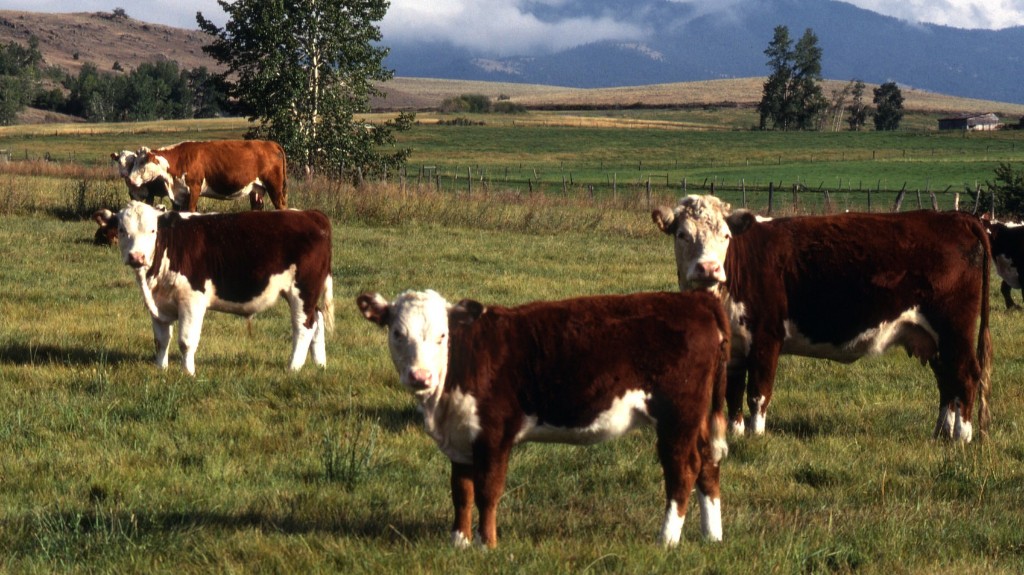
The first case of screwworm in 60 years was confirmed on a Texas cattle ranch, a single infected calf that arrives as the U.S. herd is already thinned to the point where there is little slack left in the system.
Washington responded by shutting the border to live cattle, and the flow stopped almost overnight: imports from Mexico fell from 104,414 head in early 2025 to zero in 2026. For decades those animals moved north to be finished in American feedlots and slaughtered in American plants, a chain that fattened cattle in the U.S. before processing and supported truckers, crop farmers and meatpacking workers. That chain no longer crosses the border. It has not disappeared.
A closed border shifts not the flow of cattle but the location of value creation
It has moved.
In Coahuila, rancher Enrique García now runs yards where pens were recently full of black cattle and a payroll that he has doubled to fatten cattle and process beef. The shift is visible at the carcass level: workers handle pieces of meat in Saltillo slaughterhouses as Mexico’s beef exports grow into the same market that used to take its live animals. In the first four months of 2026, those shipments soared.
The disease that triggered the shutdown has not spared Mexico. Screwworm, a parasitic fly that lays eggs in wounds, has infested nearly 28,000 animals there. But the response has been to keep cattle longer, not move them less. The industry has built up feedlots and expanded processing facilities, turning a sanitary barrier into an industrial one. Since Washington closed the border to live cattle, Mexico has expanded meat processing facilities and kept those cattle at home to be raised and slaughtered.
Supply tightness in the U.S. meets a faster industrial response in Mexico
American producers feel the inversion in their books. Domestic supply has dropped to a 75-year low, pushing beef prices to record highs as drought and fire forced herd reductions. The system was already tight: the U.S. once brought in more than a million cattle a year from Mexico, roughly 4–5% of animals used in production. That margin has vanished at the same moment demand only partially adjusts—a 10% rise in price cuts consumption by about 7%—leaving the market to clear through higher prices rather than lower volumes.
The pressure shows up in the language of feedlot operators. “If they end up feeding and processing them in Mexico, how are we winning?” asks Kyle Williams of Lubbock Feeders. He answers his own question: “We’re giving this to them on a silver platter,” he says, meaning work, labor, and people that are not getting to do it here in the U.S. The complaint is not about cattle. It is about where value is added.
What changed is not the animal but the stage at which it crosses the border. For decades, Mexico exported weight that the U.S. converted into margin. Now it exports margin directly. The animals that once fed American infrastructure now feed Mexican infrastructure that did not exist at scale before the ban. “They’re building infrastructure in Mexico,” Williams says, because “they’re forced to figure it out.”
A policy aimed at containment is redrawing the industry’s geography
The justification for the shutdown rests on history. The last eradication campaign required the U.S. to drop trillions of sterile flies and ended the epidemic only after decades. That memory sits behind the current caution. But the policy choice is doing more than containing a parasite. It is reassigning the geography of an industry in real time.
Even a limited outbreak carries cost. The current case is the only one identified so far, yet it already represents a serious challenge and could push prices higher. Wider spread would force ranchers to spend more on treatment and prevention, but the economic dislocation is already happening without it. The U.S. has removed a supply input it depended on while the demand side adjusts slowly and incompletely.
Mexico has adapted faster than the disease has spread. It has raised beef exports to the United States despite the ban on moving live cattle north, capturing the processing stage that used to sit on the other side of the border. The result is not a shortage of beef crossing into the U.S. It is a change in what crosses.
Infrastructure built under pressure may outlast the crisis that created it
The assumption embedded in the shutdown is that once the sanitary risk is contained, the old flow will resume. But the assets being built in Coahuila—feedlots, slaughter capacity, labor—are not temporary responses. They are fixed investments designed to keep cattle where the value is added. When those animals no longer need to move north to be finished, the U.S. does not get that stage back by reopening a gate.
The border closure was meant to keep a fly out. It has instead kept an industry in.