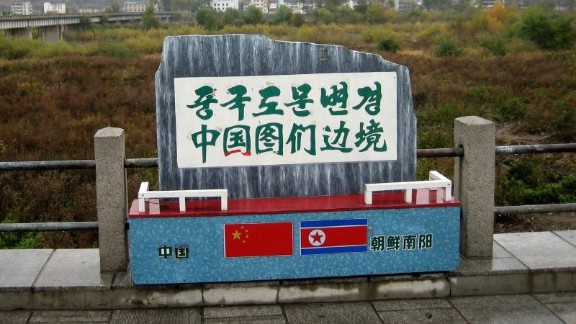
Chinese customs recorded US$325.8 million in total commerce between China and North Korea in April, the highest level since December 2017, when sweeping trade bans were unleashed. The number sits awkwardly beside a visit that produced no concrete deals.
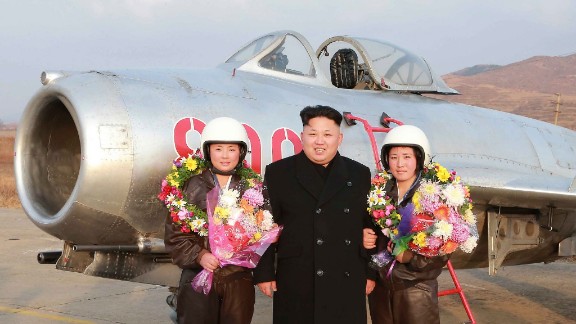
Xi Jinping has wrapped a two-day visit to Pyongyang, his first official trip since 2019, after a reception in which Kim Jong Un pulled out all the stops. The choreography was dense: banquets, school visits, a fir tree planted to signal permanence. The transaction was not.
Symbolism fills the space where tangible outcomes are absent
The absence matters because the visit comes as Beijing is trying to reassert sway over a partner that has drawn closer to Russia. Xi arrives needing to remind; Kim stages the welcome to show he does not need reminding.
Beijing’s claim is explicit. Xi will feel he has done enough to remind Kim that his main benefactor is China. The leverage is structural: China is North Korea’s most important political and economic partner, the system that keeps the economy functioning under sanctions. The trade data shows that system working again.
But Pyongyang’s counterclaim is staged just as clearly. Kim uses the visit to demonstrate that he has important friends despite continued international sanctions, timing Xi’s presence weeks after meetings with Donald Trump and Vladimir Putin. The signal is not subtle: access to Beijing does not preclude options elsewhere.
Strategic autonomy in Pyongyang erodes Beijing’s traditional leverage
Those options have hardened into something Beijing does not control. Russia and North Korea have significantly deepened their military cooperation, with Pyongyang deploying at least 12,000 troops to support Russian forces in Ukraine and supplying munitions. Beijing’s response is to step back rhetorically; its foreign ministry says Russia and North Korea “are two independent sovereign states”. The sentence concedes distance it cannot close.
That distance shows up in what was not said in Pyongyang. Discussions about denuclearisation were absent from state media readouts. China has already toned down its calls to denuclearise the Korean peninsula. A constraint that once defined the relationship has been quietly set aside.
The economic side of the relationship looks fuller, but it is narrower than the headline suggests. Of the US$252.3 million in Chinese shipments to North Korea in April, much replaces flows frozen when the Covid-19 pandemic and border closures froze bilateral trade. On the other side, Chinese imports from North Korea reached US$73.5 million, still anchored in a single workaround.
Economic recovery masks a narrowing base of exchange
North Korea’s export base has collapsed to what sanctions do not explicitly prohibit. Exports barely reached $360 million in 2024. Fake hair and wigs make up about 40% of those exports, shipped to China, which reexports them to the rest of the world. The country turned to wigs after sanctions blocked coal and mineral exports, relying on an abundant supply of low-cost and often forced labor. The lifeline runs through a loophole.
That dependence gives Beijing leverage, but only of a particular kind. It can move goods, absorb output, and keep the system from stalling. It cannot dictate where Pyongyang sends troops or ammunition. The more North Korea earns strategic value from Russia, the less its economic dependence on China translates into political compliance.
The visit tries to compress that gap into symbolism. Xi says the two countries are “linked by mountains and rivers and share a common destiny”. Kim replies that the relationship is a “reminder of the strength of their friendship” and pledges to keep it a top priority. They mark the 65th anniversary of their defence pact, the only one China has with any country, and stand before a tower that commemorates Chinese soldiers who fought in the Korean war. History is doing the work policy no longer can.
Ceremony sustains the relationship as policy constraints fade
Yet even inside the ceremony, the imbalance shows. Kim appeared to get his way on at least one key issue: silence on denuclearisation. Beijing accepts the omission because pressing it would expose the limit of its influence. The fir tree planted in Pyongyang marks continuity; the agenda marks concession.
The result is a relationship that looks fuller in trade and thinner in control. Beijing can point to rising commerce and a defence pact no other country shares. Moscow can point to troops, shells, and missiles already in motion. Pyongyang can point to both.
The unresolved condition sits there: China remains the system that keeps North Korea’s economy alive, while Russia has become the partner that gives its military choices consequence. Beijing is supplying the baseline; Moscow is shaping the trajectory.
China’s position looks strongest where the numbers are largest—US$325.8 million in monthly trade, a revived pipeline of goods, a partner structurally dependent. But that strength rests on an assumption the facts no longer support: that economic centrality converts into strategic control. North Korea is already proving it does not, and China is already adjusting its language to live with that fact.