Trade growth signals a strategic realignment rather than a simple recovery
In the first two months of this year, China’s trade with North Korea rose 22% year-on-year, reaching $418.7 million. The increase is modest in absolute terms. It is decisive in context.
North Korea’s economy does not diversify its risks. It concentrates them. Up to 95 percent of its total trade and 85 percent of its exports depend on China. That reliance has survived sanctions, contraction, and isolation. It has now resumed growth just as Pyongyang’s external relationships have become more complicated than at any point in a decade.
Beijing did not stumble into this position. China has been working to draw North Korea back into its fold after the pandemic froze exchanges. The thaw is visible not only in trade but in choreography. Xi Jinping held his first meeting in six years with Kim Jong Un when the North Korean leader visited Beijing, and Foreign Minister Wang Yi travelled to Pyongyang urging closer coordination. The sequence matters because it follows a period when Pyongyang had begun to look elsewhere for leverage.
Moscow’s channel transforms diplomacy into operational exchange
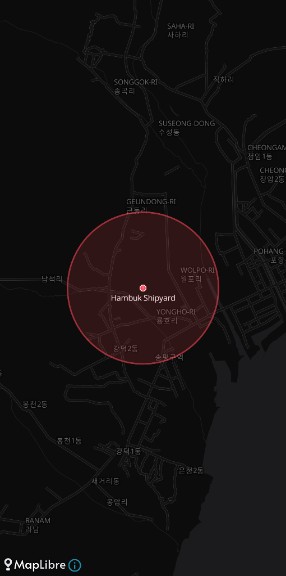
That alternative channel runs through Moscow. Vladimir Putin has strengthened relations with Kim since the pandemic and the invasion of Ukraine, and that diplomacy has persuaded North Korea to supply weapons to the Russian war effort. The exchange is not rhetorical. It is structured. A Russian state defence bank issued roughly 1 billion rubles in loans to a fuel trading intermediary, which routed payments through a Far East shipping company matching North Korean tanker arrivals. The conclusion is operational rather than political: Russian military financial infrastructure is embedded in an oil-for-arms exchange with Pyongyang.
For North Korea, this creates a second lifeline. It also creates a conflict between lifelines. The Russian channel delivers energy, food, and technology. Russian military technology could advance North Korea’s satellite, submarine, and ICBM programmes. Beijing delivers something less visible but more foundational: liquidity and continuity. Even after Pyongyang’s pivot toward Moscow, Beijing remains a crucial source of political and economic support.
The tension is not abstract. It sits inside North Korea’s export structure. Sanctions closed off coal and minerals, forcing a shift into goods that fall between regulatory gaps. The country turned to wigs for vital foreign income, a product not explicitly banned. Total exports barely reached $360 million in 2024, with fake hair accounting for roughly 40 percent, primarily shipped to China for re-export. This is not resilience. It is dependency disguised as adaptation.
Sanctions compress the system while reinforcing a single point of control
Sanctions were never designed to eliminate that dependency. They were designed around weapons flows. Early measures focused narrowly on WMD-related goods, and later restrictions on financial flows did not, in principle, target commercial trade. The effect was to compress North Korea’s economy without severing its access to a single dominant partner. Trade contracted sharply after 2015 as enforcement tightened, but it did not fragment. It reconcentrated.
That concentration is what Beijing is now trying to manage, not unwind. The problem is no longer access. It is control. North Korea’s nuclear capability is a point of concern for Beijing, and Kim has called for an “exponential” expansion of the arsenal. Chinese officials are watching the pace rather than the existence of the programme. Beijing is keeping an eye on what one analyst called an “extremely rapid” nuclear trajectory, because provocative behaviour could trigger regional conflict that runs counter to China’s interests.
This is the contradiction Beijing cannot price out. The more it restores economic ties, the more leverage it regains over Pyongyang’s baseline stability. But the more valuable that stability becomes to North Korea, the less incentive Kim has to moderate the behaviour that threatens it. Russia’s parallel channel sharpens that dynamic. It gives Pyongyang a way to escalate militarily while buffering the economic consequences through Beijing.
Diplomatic signals orbit a system whose tensions continue to compound
Washington’s position does not resolve the contradiction. Donald Trump has said he would like to revive relations with Kim, whom he met more than once during his first term. Beijing has publicly framed its own approach as cooperative, with Xi declaring the need for China and the US to work as partners while warning against interference over Taiwan. These statements do not intersect at the point where the system is under strain. They orbit it.
What holds is the structure beneath the diplomacy. North Korea’s trade has resumed growth. Its military partnerships have deepened. Its nuclear ambitions have accelerated. None of these trends cancel the others out. They compound.
Beijing is rebuilding an economic relationship with a country that depends on it for nearly all of its trade while that same country embeds itself in a Russian war economy and accelerates a nuclear programme Beijing explicitly wants contained. The leverage China is restoring is real. The assumption that it can be exercised without underwriting the behaviour it seeks to restrain is not.