North Korea’s exports barely reached $360 million in 2024, and fake hair and wigs made up about 40% of that total, most of it sent to China and then reexported to the rest of the world. The country turned to that trade because sanctions blocked its traditional exports like coal and minerals, leaving a low-tech, labor-intensive industry—fed by an abundant supply of low-cost and often forced labor—to carry what little foreign income remains. The numbers are small enough to miss. They are not small enough to ignore.
Economic fragility coexists with rising strategic importance in a shifting geopolitical order
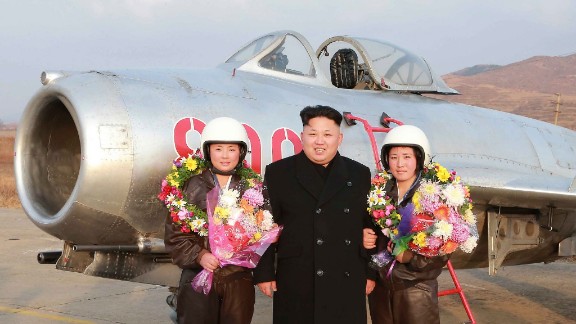
Pyongyang’s economic reality sits uneasily beside its growing strategic utility. Since Russia invaded Ukraine in 2022, Pyongyang has provided Moscow with critical weapons, artillery and manpower, shifting its relevance from trade partner to wartime supplier. That exchange has begun to reprice North Korea’s value to its neighbors, and it is why Xi Jinping’s visit on June 8-9 comes as Pyongyang strengthens relations with Russia.
The choreography suggests unity. Xi, Kim and Vladimir Putin stood side by side at a massive military parade in Beijing, an image that projected a show of strength from the would-be leaders of a new, autocrat-led world order. But the photograph obscures the arithmetic underneath. Each of the three is trading something different, and none can afford to let the others set the terms.
China’s balancing act reveals structural tensions beneath displays of unity
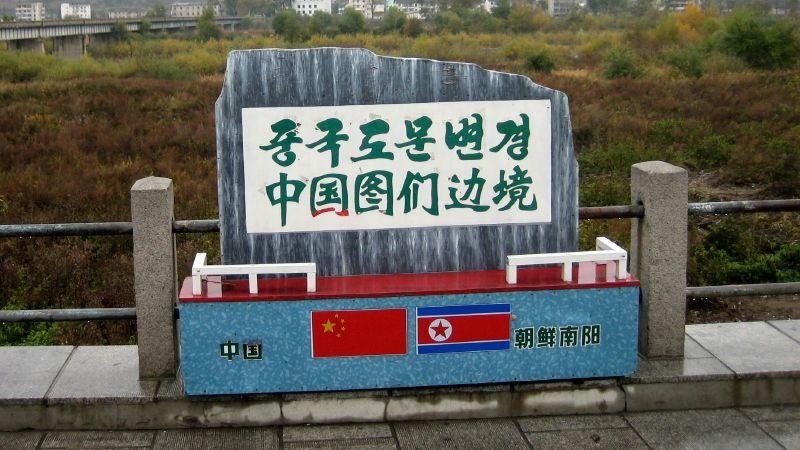
China enters the exchange with the most to lose. Pyongyang still depends on Beijing for as much as 95% of its trade, a relationship Xi described as a “new historical starting point, facing new development opportunities” while insisting maintaining and developing ties has “always been an unwavering policy”. Yet Beijing is also trying to maintain a strategic trade relationship with the US, even as Washington and Beijing have departed from their previously united front on North Korea’s nuclear buildup. The balancing act is not rhetorical. It is structural.
That structure is already shifting. When Xi met Kim in Beijing last year, their official readouts omitted any mention of denuclearisation for the first time. After a subsequent summit, the White House said Donald Trump and Xi confirmed a shared goal to denuclearise North Korea, but Beijing did not confirm this statement. The omission is not a gap in language. It is a change in priority, and it coincides with North Korea becoming more useful to Moscow than compliant to Beijing.
Washington has noticed, but it has not closed the gap. Donald Trump visited Beijing for a summit framed as re-stabilising US-China relations, one that was low on tangible deliverables. He later said he discussed North Korea with Xi and repeatedly said he would like to meet Kim again. There is even speculation he asked Xi to pass on a message. The chain of communication now runs through Beijing at the same moment Beijing’s leverage is being tested.
Beijing’s leverage erodes as North Korea recalibrates toward military value over trade
That is why Xi is back in Pyongyang for his first trip in seven years, expected to offer economic aid packages including rice and fertilisers, a resumption of Chinese group tourism, and joint projects. The offers are not new. What has changed is what they must now compete with. Russia is paying in military relevance, not trade volume, and North Korea’s leadership is calibrating accordingly.
China’s response is to reassert its position before that calibration locks in. Analysts say Beijing is seeking to prevent Pyongyang from leaning too heavily towards Moscow while also trying to acquire technology that would make it militarily stronger. Xi’s broader objective is to demonstrate China’s leadership role in Northeast Asia in an age of strategic competition with the US. Leadership, in this case, depends on something China no longer fully controls.
The imbalance runs deeper than diplomacy. The four countries now loosely aligned—China, Russia, Iran and North Korea—share a mutual desire to challenge U.S. and Western influence and generate one-quarter of global GDP, with roughly one-fifth of global defense spending and more than half the world’s nuclear weapons concentrated among three of them. But their power asymmetries differ vastly, and North Korea’s economy remains the smallest variable in the system. Its leverage does not come from what it produces. It comes from what it is willing to supply.
That leaves Beijing holding a relationship built on assumptions that are eroding. For decades, China acted as the senior partner because it controlled the economic lifeline. Now North Korea’s most consequential exports are not the wigs that dominate its official trade but the weapons and manpower it sends elsewhere, outside the sanction-bound channels China can monitor or price. Beijing can still ship rice. It cannot easily replace Moscow’s demand.
John Delury described China’s position as partly emotional—“nostalgic”—but the constraint is practical: “They don’t want to let North Korea’s closeness with Russia outpace the ties with China too much.” The sentence acknowledges the risk. It does not resolve it.
China still controls most of North Korea’s legal trade flows. It no longer controls the terms that matter most.
Cover photo Prince Roy CC BY 2.0