A framework presented as a ceasefire was described by a Beirut-based analyst as “closer to an agreement aimed at Hezbollah more than actually being a ceasefire agreement”. The distinction is not semantic. It determines who is expected to move, disarm, or stop firing — and who is not.
Ali Rizk told Al Jazeera that “this ceasefire agreement is closer to an agreement aimed at Hezbollah”, adding that “it is mostly a project to disarm Hezbollah”. The clauses, he said, “clearly show” that intent, echoing remarks that frame Hezbollah as “an enemy of Israel and the US, but also an enemy of the Lebanese people”. A ceasefire that defines one side as the problem to be dismantled shifts from mutual restraint to conditional compliance. That shift determines how the document is read by the party asked to comply.
What is framed as a ceasefire becomes a mechanism of unilateral obligation
Hezbollah rejected the proposal outright. Rizk said “it was little surprise” because the text “appears to take the shape of a one-sided arrangement” that “takes aim” at a political and military network rather than a battlefield dynamic. The imbalance is not inferred; it is written into what the agreement asks one side to do.
The asymmetry becomes explicit in what is missing. Rizk said the agreement was “conspicuously silent on Israeli obligations”. Instead, “there is an excessive focus on the necessity of Hezbollah stopping its fire and withdrawing from its positions”. A ceasefire that specifies one side’s withdrawal without specifying the other’s creates a structure that cannot be executed as written. It requires acceptance without reciprocity.
The absence of reciprocity collides with capability and battlefield reality
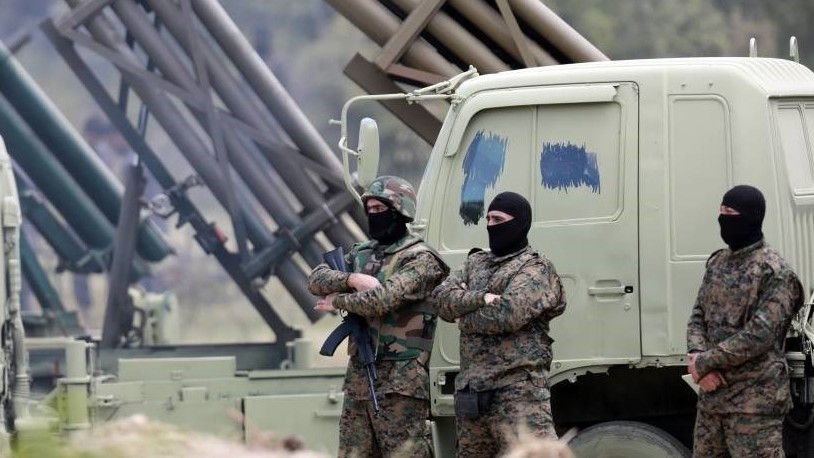
That absence lands against a battlefield reality that neither side can ignore. A report warned that Hezbollah has more firepower than “95 percent of the world’s conventional militaries”, outlining the scale of the challenge Israel would face in a future conflict. A group with that capacity is being asked to disarm under a framework that does not bind its adversary to equivalent steps. The gap between capability and obligation is not theoretical; it defines whether compliance is conceivable.
At the same time, the record of compliance already shows strain. A formal communication states that Israel continues to violate the ceasefire agreement and that UN facilities are being attacked. A ceasefire that is both uneven in design and contested in practice accumulates contradictions. It asks one actor to disarm while evidence circulates that the other continues operations.
Contradictions deepen as international framing diverges from operational design
International forums have not resolved that contradiction; they have reframed it. A resolution “strongly condemns” Israel for its purported “starvation of civilians as a method of war” and demands that it “immediately end the blockade”. It identifies Israel as the main target, even as the failure to directly condemn Hamas for its violations shapes how the text is read. The language assigns responsibility unevenly, just as the ceasefire does operationally.
Lebanon absorbs these pressures through a state already in systemic failure. The country’s crisis combines a foreign debt default, a currency devaluation and banking sector bankruptcy in what the World Bank calls a “perfect storm.” Its consequences are “threatening the survival of the country as we know it”. A ceasefire that cannot stabilize the security environment feeds directly into a system that cannot absorb further shocks.
A political system built on militias constrains any pathway to disarmament
That system is not neutral terrain. Lebanese political parties were founded as militias during the civil war, and smaller actors remain dependent on larger coalitions to secure representation. Hezbollah operates inside that structure as both a military force and a political actor. A document that targets its military capacity without addressing the political system that sustains it leaves the underlying network intact.
The result is a framework that assumes disarmament can precede political settlement, enforcement can precede reciprocity, and compliance can be extracted from an actor whose capacity rivals state militaries. Each assumption is contradicted by a fact already on the table.
The agreement does not fail because it is rejected. It is rejected because it asks for an outcome the structure beneath it cannot carry: the unilateral disarmament of a force that outguns most of the world’s conventional militaries, inside a state whose collapse already threatens its survival, under terms that do not bind the opposing side.
Cover photo Tasnim News Agency reporter CC-BY-SA-4.0