Israel carried out drone strikes in the Nabatieh area of southern Lebanon on Thursday morning, hours after Washington said it had agreed a ceasefire to end hostilities. The contradiction is not buried in the details. It is the detail.
The agreement depends on actors who are not part of it
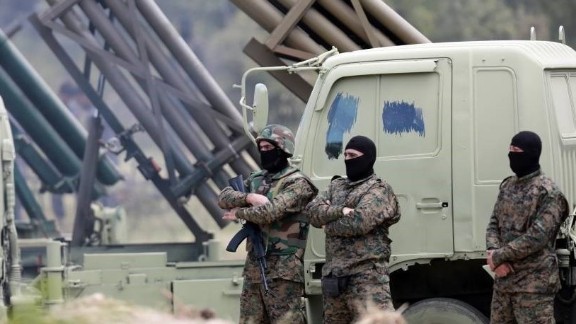
The ceasefire itself comes with caveats that push enforcement onto an actor not present in the room. The deal is contingent on a complete cessation of fire from the Iran-aligned Hezbollah armed group, and on the evacuation of all its fighters from the area south of the Litani River, even as Hezbollah has not been part of the talks. The agreement asks for compliance from the one party that did not consent to it. That absence is not procedural. It is structural.
Beirut has tried to turn that absence into leverage. The Lebanese government has been negotiating with Israel without Hezbollah in an effort to reassert control and disarm the group. The state is attempting to use diplomacy to rewrite a domestic balance of power that force has failed to resolve. It is doing so while the ground beneath it is still moving.
The battlefield extends beyond combatants to the conditions for civilian life
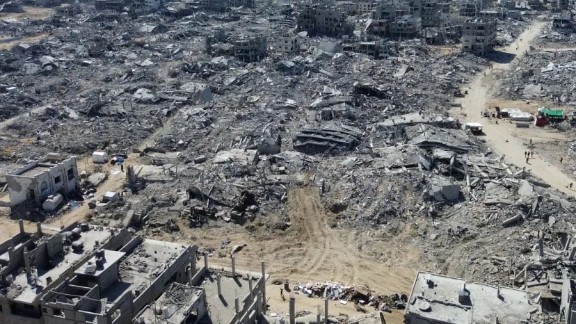
That ground includes the hospitals. Three hospitals in southern Lebanon have been attacked by Israel in under a week, wounding more than 150 people and killing nine. Analysts say the strikes were aimed at degrading the conditions for life in south Lebanon. The target is not only infrastructure but the viability of civilian presence itself. Remove that, and control of territory becomes an accounting exercise.
Israel’s military offers a narrower frame. It says it had struck “Hezbollah infrastructure in the area of Tyre” and that a hospital was “affected incidentally”, adding that Hezbollah had “taken over” one of the hospitals it struck. The claim relocates responsibility into the building itself. If the site is militarised, the strike follows. If the strike follows, the civilian consequence becomes secondary. That logic does not require a ceasefire to stop; it requires a different definition of what counts as a target.
Measured patterns and financial costs reveal a conflict that continues regardless of diplomacy
The pattern is measurable. In Lebanon, 47% of attacks on health care have proven fatal to at least one health worker or patient, a share higher than in any active conflict today. Nearly half of such attacks cause the death of a health worker, against a global average of 13.3%. This is not incidental damage accumulating at the margins of a campaign. It is a rate that suggests intent is expressed through repetition.
The economic ledger runs alongside it. Israel’s military expenditure surged by 65 percent to $46.5 billion in 2024, the steepest annual increase since 1967, accounting for 8.8% of GDP. Over two years of conflict, the economy has suffered losses exceeding $57 billion, equivalent to 8.6% of annual GDP, largely attributed to the war in Gaza and including the cost of operations in Lebanon. Those figures do not yet include the ongoing conflict involving Iran, which has entered its fourth week. The spending is immediate. The losses are cumulative. Neither has paused for negotiations.
Washington is trying to impose a limit from the outside. The House has voted 215 to 208 in favor of a war powers resolution to force the president to seek approval or withdraw forces, a rebuke that included four Republicans voting with Democrats. It is the fourth vote on a conflict that has been running for more than 90 days, the threshold at which the 1973 War Powers Resolution requires congressional approval to continue hostilities. The White House has rejected that argument, citing a temporary ceasefire that has been broken several times by the US, Israel and Iran. The legal clock is being answered with a political definition of interruption.
A familiar structure of dependence leaves the state attempting control without authority
Lebanon has seen this structure before, when stability depended on conditions it did not control. A benign global environment helped Lebanon manage financial pressures in earlier crises; local banks played a key role in maintaining stability because they held the bulk of government paper and had no incentive to liquidate. That system held until it did not. The current crisis combines a foreign debt default, a currency devaluation and banking sector bankruptcy into a collapse whose consequences threaten the survival of the country as we know it. The state is again trying to hold a line with instruments that depend on actors it cannot compel.
The ceasefire rests on the same premise. It assumes Hezbollah will stop firing, that Israeli strikes will follow, that hospitals will remain peripheral, that Washington can define interruption as compliance, that Beirut can negotiate sovereignty into existence. Each assumption shifts responsibility to a party not bound by it. Each has already been tested by events on the ground.
The agreement is not failing in the future. It is being outpaced in the present, by strikes that continue, by conditions that deteriorate, and by a balance of power in southern Lebanon that no document signed without Hezbollah can enforce.