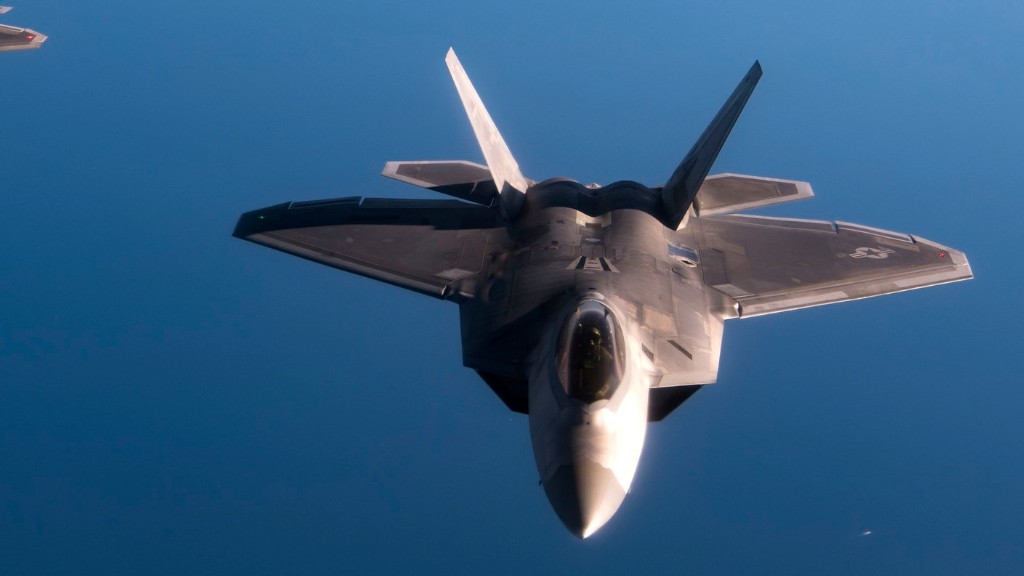
French pilots were sent up 11 times in a single week to meet aircraft that never announced themselves. The sorties came so frequently that the armed forces spokesperson called them a higher-than-usual run of “provocations” as part of NATO’s Baltic Air Policing Mission. The jets they met were not lost. They were silent.
The mission exists because three countries cannot fully defend their own skies. It protects the airspace of Estonia, Latvia and Lithuania with rotating deployments of NATO fighter jets filling gaps in their capabilities. That dependence turns every unidentified radar contact into a test of reaction time rather than sovereignty. Aircraft are launched not when borders are crossed, but when something approaches without explanation to intercept unidentified or non-compliant aircraft. The system assumes ambiguity can be managed through repetition. It is being tested by scale.
Repetition becomes the signal rather than the exception
Guillaume Vernet described what the French detachment actually encountered: Russian military aircraft flying without flight plans or radio contact, including armed fighters, intelligence platforms and transport planes. The sorties were not isolated. They formed a pattern dense enough that the high number could signal Moscow seeking to flex its muscles during the same week it hosted its St Petersburg International Economic Forum. The signalling was not diplomatic. It was procedural — repeated enough to become routine, but visible enough to be read.
Routine is the point of pressure. Those close to operations describe nearly all interceptions as “almost routine” despite their frequency, even as the sheer volume carries a risk of escalation. The contradiction sits in the air: repetition reduces surprise but increases exposure. Each launch is controlled. The aggregate is not.
The pattern extends beyond the Baltic. Japan has been scrambling aircraft in record numbers in response to Chinese activity. Airspace violations by Turkish aircraft over Greek waters have surged. The geography differs. The mechanism does not. Aircraft approach, transponders go dark, interceptors rise. The incidents remain below the threshold of breach — a scramble doesn’t imply a violation of sovereign airspace — but the margin is counted in seconds. In March and April, incursions into Norwegian and Polish airspace lasted seconds. Seconds are enough to register. Not enough to resolve.
Capacity is reduced even as pressure intensifies
Even where lines are crossed, they are crossed lightly. A Russian aircraft briefly entered Finnish airspace. Elsewhere, eight incidents occurred over islands belonging to Estonia, six over the remote Vaindloo. These are not attempts to hold territory. They are probes of response. Each one asks the same question: how often can this be done before it stops being exceptional?
NATO’s answer is to do more with less. Despite the increase in interceptions, the alliance will halve the number of aircraft used in the mission later this year. The drawdown follows a longer trend: the number of jets has already been reduced after earlier increases that were put in place after Russia’s annexation of Crimea in 2014. The official explanation is procedural — a return to “usual” rotations conducted by two detachments. The operational reality is arithmetic. Fewer aircraft will answer the same number of unknowns.
That arithmetic sits uneasily beside the political story NATO tells itself. European allies have accelerated spending, increasing defence budgets by 20 percent in 2025, with all now exceeding previous targets. The alliance presents this as cohesion — defence spending taking centre stage to demonstrate unity ahead of the Ankara summit. But spending is a lagging indicator. Aircraft availability is immediate. The pilots flying from Baltic bases do not intercept budgets. They intercept signals.
The signals are intensifying close to home. Recent years have seen an escalation in military activity in the Baltic, enough that Sweden is refocusing its defence forces back to homeland defence after decades of outward deployments. That shift reverses a long decline in effort — defence spending that fell from 5 percent of GDP to 1 percent — and acknowledges that proximity has returned as a variable. The Baltic is no longer a quiet flank. It is a corridor of repeated contact.
Contact is what the system was built to manage. It was not built for saturation. NATO once tracked large-scale Russian air activity across European airspace as an “unusual level” of manoeuvres. What was unusual has become frequent enough to be described as routine. The category has shifted without the mechanism adapting.
The risk is not that a single interception fails. It is that success becomes indistinguishable from strain. Eleven scrambles in a week still count as control. Halving the aircraft that perform them does not change the requirement to respond. It concentrates it.
The Baltic mission was designed to fill gaps. It now depends on them.