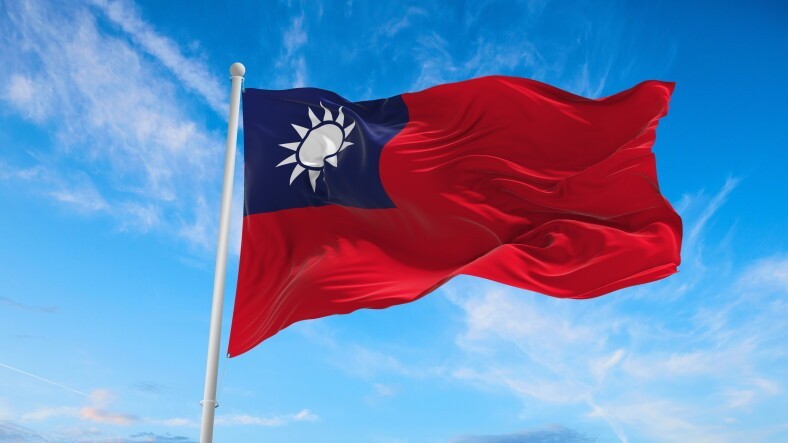
Taiwan’s finance ministry reported that exports jumped 51.7% from a year earlier to $78.48 billion, the second-highest monthly figure on record. The number did not just exceed forecasts; it cleared them by a margin large enough to suggest something more structural than a good quarter.
Analysts had pencilled in a far smaller expansion — growth of roughly the high 30s — after April’s already elevated 39% gain. Instead, May accelerated. The gap between expectation and outcome is where the story sits: demand is not merely strong, it is pulling forward.
Demand is not just strong, it is arriving ahead of schedule
The composition makes that clear. Exports of electronic components jumped 66.9% to $19.44 billion, while information products rose 118%. These are not broad-based gains. They are concentrated in the hardware that sits under artificial intelligence workloads.
That concentration has been building for months. In the first quarter alone, total exports reached $195.74 billion, 51.1% higher than a year earlier, with the increase almost entirely coming from three categories: data processing machines, integrated circuits and related parts. Data processing machines accounted for about 60 per cent of the rise. The export engine has narrowed even as it has accelerated.
Taiwan’s own data attributes the surge to one source. Artificial intelligence and cloud business demand remained solid because cloud service providers’ capital expenditure remained at high levels. The island is not creating demand; it is fulfilling orders placed elsewhere, in balance sheets it does not control.
Trade flows have not shrunk, they have been rerouted
Those orders are being routed differently than they were even a year ago. In May, exports to the U.S. rose 47.9% to $22.939 billion, while exports to China climbed 35.4%. That divergence sits on top of a longer shift: for the first time in at least 40 years, Taiwan exported more goods to the U.S. than to China. Trade flows have not shrunk. They have been rerouted.
The rerouting is visible in Washington’s own numbers. Taiwan exported over $201 billion to the U.S. in 2025, nearly doubling from the previous year, while the U.S. trade deficit with Taiwan roughly doubled to nearly $147 billion. At the same time, U.S. trade with China decreased by tens of billions. Supply chains did not unwind; they shifted jurisdiction.
Tariff policy accelerated that shift. A recent agreement reduced U.S. tariffs on many Taiwanese goods from 20% to 15%, after which shipments to the U.S. skyrocketed 124%. What looks like an export boom in Taipei is also a policy outcome in Washington — and a redistribution of where production sits on paper.
Growth is accelerating even as its base becomes narrower
The result is an economy that is both expanding and narrowing at the same time. Taiwan’s exports rose by about $167 billion between 2024 and 2025, a 35 per cent increase, but the increase was overwhelmingly driven by a narrow set of technology products linked to artificial intelligence. Growth has become more dependent even as it has become more impressive.
Economists inside the system are explicit about the trade-off. Alicia García Herrero calls the concentration “a huge vulnerability to AI and [a potential] tech downturn”. She adds that the diffusion of AI gains is very limited to a small group of companies. The export boom is not evenly held. It sits on a narrow base.
That base depends on spending cycles elsewhere. Taiwan’s own ministry expects momentum to continue — exports in each of the next three quarters are expected to top $200 billion, with June alone forecast to rise 42% to 49% from a year earlier. But in the same statement, it acknowledges that global economic growth momentum would be limited by risks from the U.S.-Israeli war on Iran and U.S. trade policy uncertainties. The demand that drives the numbers is also exposed to shocks the island does not influence.
The export boom rests on decisions made outside the island
What sits underneath the record figures is a simple asymmetry. Taiwan is selling the components of a global investment cycle in artificial intelligence, but it does not set the pace of that cycle. The orders come from cloud providers whose capital expenditure remains high today because their own revenue expectations justify it.
The export data shows what happens when that assumption holds. It does not show what replaces it if it doesn’t.
The imbalance is already visible in the distribution of gains. A narrow set of exporters captures most of the upside, while the broader economy tracks the cycle indirectly. That structure works as long as external demand compounds. It tightens when it stalls.
Taiwan’s export machine is therefore carrying two loads at once: the global build-out of AI infrastructure and the rerouting of trade away from China into its own balance sheet. Both have delivered record numbers. Neither is anchored in Taiwan itself.
The May figure — $78.48 billion — is not just a peak. It is a measure of how much of Taiwan’s economy now depends on a single external decision: whether the companies driving AI and cloud demand keep spending at the same rate.